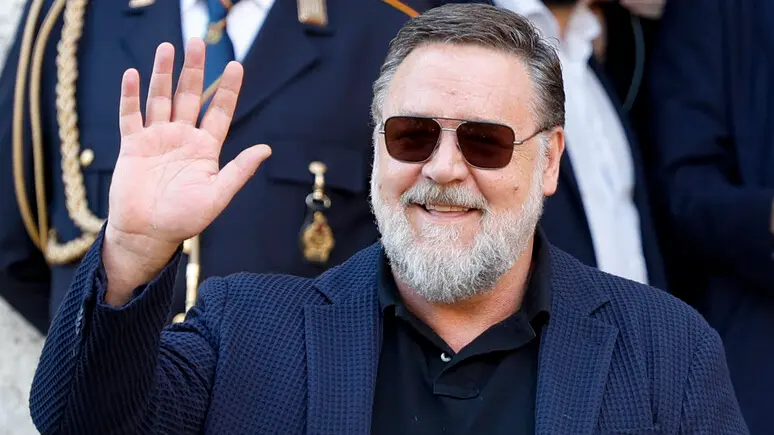


A project of imposing proportions, both in terms of production scale and artistic ambition, marks Russell Crowe's return to film with "Nuremberg." The film, inspired by the crucial moments of the Nuremberg trials, written and directed by James Vanderbilt, took thirteen years to develop before reaching its final form. After its premiere at the Toronto Film Festival and widespread media speculation that Crowe was a potential Oscar contender, the film is preparing to debut on November 7th, as also highlighted by the official trailer, which illustrates some of the plot's key moments, including the arrest of Nazi leaders by the Allied forces of Russia, France, the United Kingdom, and the United States.
The post-war drama is based on Jack El-Hai's book "The Nazi and the Psychiatrist," which centers on Lieutenant Colonel Douglas Kelly, an American military psychiatrist who was among the first to judge the defendants during the trial, played in the film by Rami Malek. Further emphasis is given to the controversial figure of officer Herman Göring, Hitler's right-hand man and follower, who became the Third Reich's highest-ranking leader immediately after the Führer's suicide. Göring will be played by an unrecognizable Russell Crowe. The stellar cast alongside the two protagonists also includes Michael Shannon, Leo Woodall, Richard E. Grant, John Slattery, Mark O'Brien, Colin Hanks, Lydia Peckham, and Wrenn Schmidt.
While it may mark a comeback for Crowe like he hasn't seen in a long time, it seems a significant portion of critics have not welcomed the film. This is particularly evident from the initial reviews published on the website Rotten Tomatoes, which currently show an overall approval rating of 50%. This isn't exactly a thrilling result, and we'll see if it changes as new reviews emerge after the official release.
At the Toronto International Film Festival last September, Crowe and Vanderbilt explained in more detail the challenges they encountered during production. First, Crowe mentioned the extremely high level of concentration required of the actors during filming: “We acted as if we were walking into a Western saloon where everyone in the room is a gunslinger. Everyone is waiting and willing to do what they have to do to make sure they stay alive until the end of the day. The energy on set was exciting.”