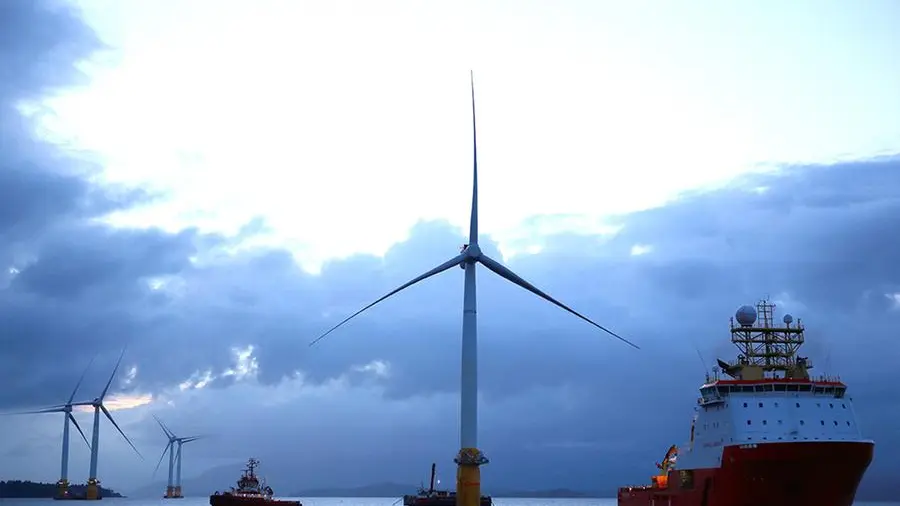


Utsira, 3,260 km north of Carloforte Island, 1,600 km from Greenland, is an almost uninhabited islet in the middle of the icy sea on the west coast of Norway. Frost in winter and summer, glacial and raging wind, in the middle of the sea, 365 days a year. The Norwegian rankings report it as the smallest of the municipalities in that state, 206 inhabitants, all cold and windy. It is no coincidence that the Norwegian Ministry of Oil and Energy in recent weeks has identified two areas in that sea for the assignment of marine concessions for the development of offshore renewables, or wind turbines floating in the middle of the sea. In practice, the government has chosen particularly windy stretches of water, in an area with a low utilization rate, and is about to announce the tender for the construction and management of offshore wind farms.
Carloforte is not Norway
Eni, for example, has already made a holy alliance with one of the most important renewable energy companies in Norway. The former state body also disclosed the news in a statement as brief as it is emblematic: «The North Sea has wind resources that are among the most important in the world. A wind farm in North Utsira could be the next large-scale project to boost the industrialization of floating offshore wind and create new opportunities for Norwegian industry. We are thrilled to start a partnership with Equinor in floating offshore wind thus contributing to Norway's growth as a leading energy nation ». The question arises: what does the sea of Utsira have to do with that of Carloforte? Nothing, apparently. Yet the Norwegian landing in the warm and blue waters of the Sardinian sea, first of all in front of the Island of San Pietro, is impressive, underground and unprecedented. Michael John Hannibal knows something about this, a neighbor of the Lapps who, out of the blue, becomes a partner and administrator of a silent network of companies all in the front row in front of the call from the Italian Ministry of Ecological Transition to occupy the sea of Sardinia and not only.
Hannibal & Borsalino
If the operation set up by Roberto Cingolani, minister of the environment, was functional to put a hat on the immense state resources destined for offshore wind, Hannibal made an agreement with Borsalino. Hats everywhere, on land and at sea, with shareholdings everywhere, from the companies directly connected with the projects to occupy the Sardinian sea, up to the Sicilian and Apulian projects. A capillary network of companies all ready to attack, first to incentives and then to the sea. All gambles on the table of offshore wind. A game as complex as it is enough to make the best casino gambler blush. Hannibal, however, is no Mr. Nobody.