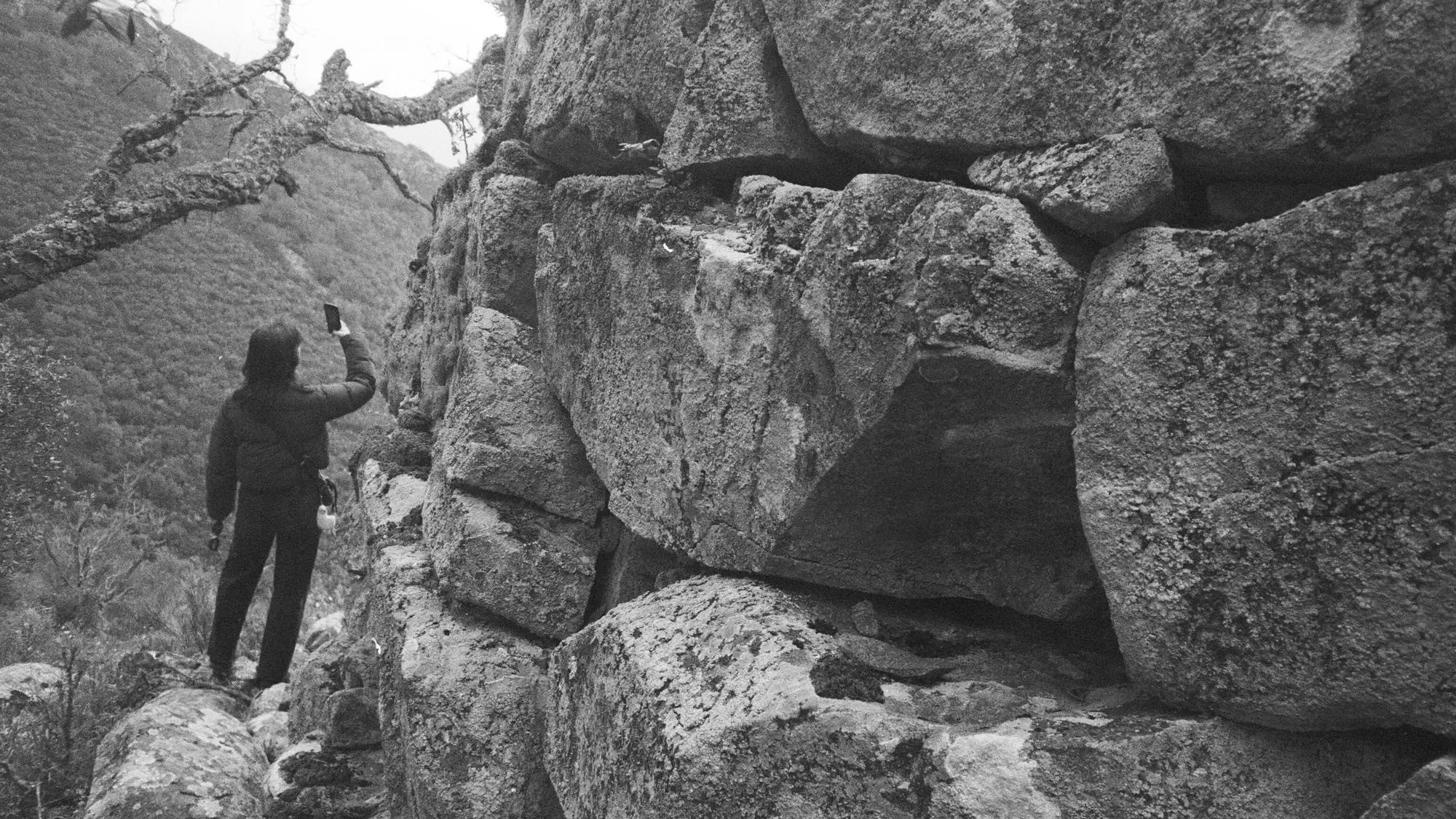


For the sixth edition of Una Boccata d'Arte, a contemporary art project spanning the entire peninsula and conceived by the Elpis Foundation, the village of Burcei hosts a new work for Sardinia. Designed by Sara Persico (Naples, 1993) and curated by Anna Pirisi for Threes, the project is titled Nuù.
The Nuù project
In Sardinian, Nuù means both "stone" and "bond." In Burcei, where rock is an integral part of identity, voice and territory intertwine in a still-active memory. The improvised poems, "is mutetus," preserved in the sound archives, bear witness to a collective knowledge passed down through time.
The artist reworks these voices together with those of the community, creating a choral and layered sound performance. In dialogue with her, sculptor Alison Darby etches the stone with signs inspired by sound, transforming it into a visual score. The project generates a new connection between song and material, between past and present, creating a living trace that becomes part of the community's living archive.
Finissage and donation to the community
For the closing of Nuù, the audio cassettes become a gift and an archive for the community. They are placed in dialogue with Fabio Talloru's Acusmatopie, which reactivates lost places with material sounds collected from vanished architecture. These two practices intertwine voice and stone, memory and landscape, generating a new connection with Burcei. The cassettes, titled Sara Persico – Nuù, contain 10 audio tracks, the result of the artist's fieldwork, recording local sounds and voices. These same tracks can be listened to digitally by visiting the small church of Sant'Isidoro, forming a collective sound archive reworked by Sara and donated to the community. The artist explains: "Nuù is a project that unites collective memory, territory, and poetry in a symbolic knot. A living archive born from listening, which creates a sonic portrait of Burcei—between voices, stone, and the breath of nature that surrounds it." Thanks to: Dino Serra and the entire municipal administration of Burcei, and the folk group “A passo antigu”.