

He's accused of terrorism, so it's right to deny him access to the Cagliari stadium. The Regional Administrative Court (TAR) ruled, rejecting the appeal against an "out-of-context ban" (Daspo) issued by one of the defendants in the "Maistrali" investigation conducted by the Cagliari Digos (Special Operations Unit) and Anti-Mafia Directorate (DDA). The three-year ban includes not only access to the Unipol Domus:
The young person may not "enter stadiums and all sports facilities in the country where men's and women's football and five-a-side football events, including friendlies, are played, relating to the Serie A, B, Lega Pro, Lega Nazionale Dilettanti championships and other matches of international and national tournaments, as well as matches of all Italian national football and five-a-side football teams, and in any case where all football competitions organised and/or sponsored by sports federations and by bodies and organisations recognised by CONI, scheduled and publicised, are held, as well as transit in areas within a radius of 500 metres from the facilities involved in the aforementioned events, from 12 hours before the event, during the same and up to 12 hours afterward". The DASPO also "banned, for the same period of time, access to areas where people participating in or attending Cagliari Calcio's sporting events are permitted to park, transit, and transport, specifically those in the municipalities of Cagliari, Elmas, and Assemini listed in the order." In short, a ban that extends both in space and time. And the alleged "abnormality" of the decision is being challenged before the Regional Administrative Court (TAR).
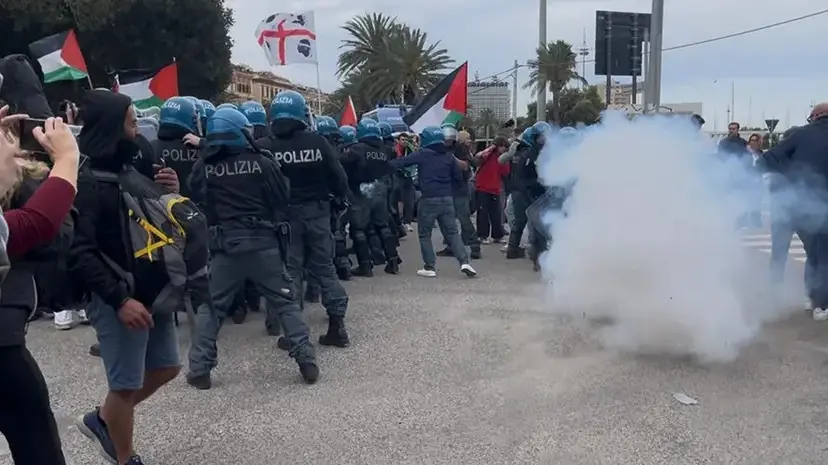
The contested order was issued by the police commissioner in January 2026, following the conclusion of the investigation—in November of the previous year—against a group "with predominantly anarchist-insurrectionist inspiration, with a horizontal and informal connotation, operating in Cagliari and other areas of the district, which intends to commit an undetermined number of acts of violence aimed at the destruction of the State through actions aimed at preventing or obstructing the free exercise of political rights guaranteed by the Constitution or interrupting or disrupting the regular performance of public offices or services, with particular reference to the military, information and scientific research, prisons, as well as freedom of economic initiative in the renewable and traditional energy sectors." For their actions, the 36 members of the organization also allegedly staged unauthorized demonstrations.