









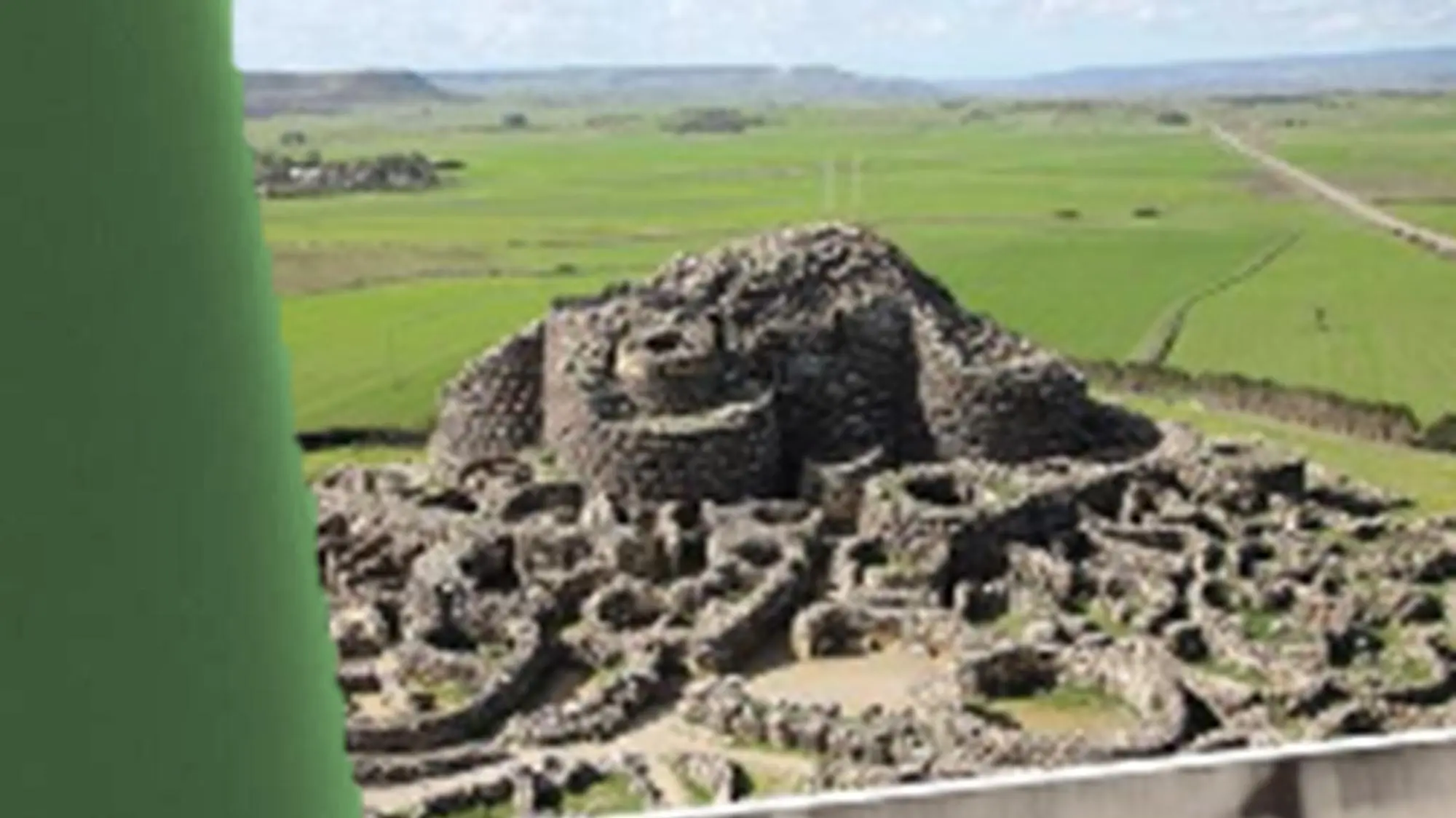


They used to go there as kids, returning from the feast of the Saint of Tuili. For everyone in the village it was "Sa Funtana", the "holly hill". Stories and narratives, behind that mystery wrapped in mythology and a thousand-year-old land. A teeming promontory, from Barumini to Las Plassas, from Villanofranca to Escolca. Marmilla, land of golden ears, whole wheat, scents of times gone by. Here, for millennia, the earth's chorography has been sculpted by the sinuous wind, climbing between plateaus and long expanses of plowed fields.
The "ditch" of Sardus Pater
Giovanni Lilliu, the Sardus Pater, the giant of Nuragic archaeology, the lands of Oreste Sanna, gazed at them from the horizon. He told the Unione Sarda in 1983: «I happened to go up from the "ditch" of the town [...] to the hill of the nuraghe, airy and beaten by the mistral, and stop to look at it, in amazement and mystery». In his eyes, that artificial relief of "Bruncu Su Nuraxi" could only be a large buried nuraghe, perhaps a village, the oldest on the island. That well at the top, a destination for libations and youthful songs, was none other than the highest summit of the "Nuragic Palace of Barumini". Men as strong as miners, boys fascinated by the discovery that was revealed to their eyes day after day, oxen rescued from the festive traccas , all shrouded in that mystery that was becoming more and more magnificent.
The company
It was the 1950s, those that marked "an undertaking ", as the great master of Sardinian archeology defined it, thanking the " brothers of a great adventure ", the workers who with him brought to light the greatest of the monuments of the ancient civilization of the Sardinian people. History, indeed. Nuragic and modern, until yesterday. Immediately afterwards, however, nefarious and vile days, capable of trampling on the altar of the most sinister affairs the history of a people, its deepest roots, its identity carved over the millennia. It happens, when common sense and a sense of responsibility are mocked, when institutions transform into tireless hoppers, capable of "crushing" monuments of 3,500 years of history in favor of "mercenaries" landed in Sardinia to make money and wind.








