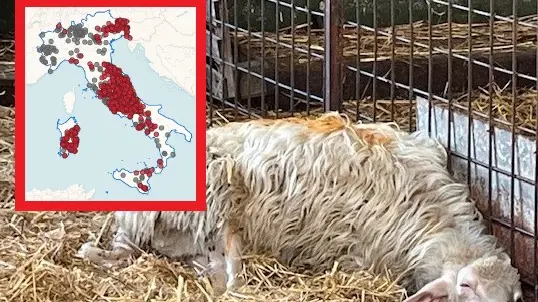


Bovine dermatitis, blue tongue, West Nile, and other epidemics. The first affects Sardinia especially, but not only. The others are widespread and aren't just an island problem. Quite the opposite. What's happening? The analysis by Alberto Laddomada, veterinarian, former head of the Experimental Zooprophylactic Institute and the task force against swine fever in Sardinia.
***
Conspiracy theorists have invented and continue to invent all sorts of stories about bovine eczema and its arrival in Sardinia: some blame the Ukrainian mafia, some imagine diabolical laboratory scientists spending their time developing new viruses and insects to destroy our farmers, some think the eczema is part of a plan to desertify our countryside and make way for wind turbines (when in fact it's the dramatic decline in births combined with new forms of emigration that is depopulating Sardinia's inland areas).
But there's no conspiracy behind bovine dermatitis. Personally, I learned a lot about the problems posed by many infectious diseases in humans and animals when I studied virology in London and Pirbright (the latter town in Surrey is home to one of the world's most prestigious institutes for the study of animal diseases) about 35 years ago, even though knowledge at the time was less advanced than it is today.
I learned first that the distinction between "animal viruses" and "human viruses" is very subtle and fragile, if not nonexistent, due to the frequency with which many viruses are transmitted from animals to humans and vice versa; and that many viruses can be capable of very rapid changes when they infect a new species, different from those they previously infected. And that some viruses are much more capable of these "changes" than others: the bovine eczema virus, for example, is quite "stable" (but no less dangerous).
And I understood much better the danger posed by those diseases that were later defined as emerging diseases.