

Everyone was there. From the beginnings of the "Beelzebub of State", alias Giulio Andreotti, undersecretary of the Presidency of the Council of Ministers, to the "Best", nickname of the leader of the Italian communists Palmiro Togliatti. Standing out are Aldo Moro, a young shield-crusader still without a government role, and the number one Christian Democrat, Alcide De Gasperi who, at the dawn of the Republic, of the constituent government, was its head. There was the Minister of Agriculture, that Antonio Segni who years later would conquer the highest hill in Rome, becoming the first genetically Sardinian Head of State, and above all, in the hall of the Constituent Assembly, he raged with the authority of history, Emilio Lussu, the Captain. It is late January, the year is 1948. The agenda of the afternoon session is without appeal: «Discussion of the constitutional bill, Special Statute for Sardinia». The transition to the articles, a prelude to the final seal, is painless for the first two: "Sardinia with its islands is constituted as an Autonomous Region within the political unity of the Italian Republic, one and indivisible..." and "Cagliari is the capital". The ordeal for the via crucis of Sardinian autonomy will not be long in coming.
Anti-autonomist platoon
It was Alcide De Gasperi, head of the government, with the tact of the sacristy and the firm fist of Christian Democratic centralism, even before starting the discussion on the merits, who re-established the boundaries between the desired federalist approach of the State and the reasons for a autonomy poorly tolerated by the Palaces of Rome. The premise of his stance is contained in a cryptic phrase uttered as a preamble to the government's rifles aimed at the already feeble transfer of powers and competences to the still unborn Autonomous Region of Sardinia: «I say honestly - De Gasperi begins - that I would have liked a more intense collaboration between the government and the Commission. And this not only for certain problems, such as that of financial autonomy, but also for more general questions."
Fire to the powders
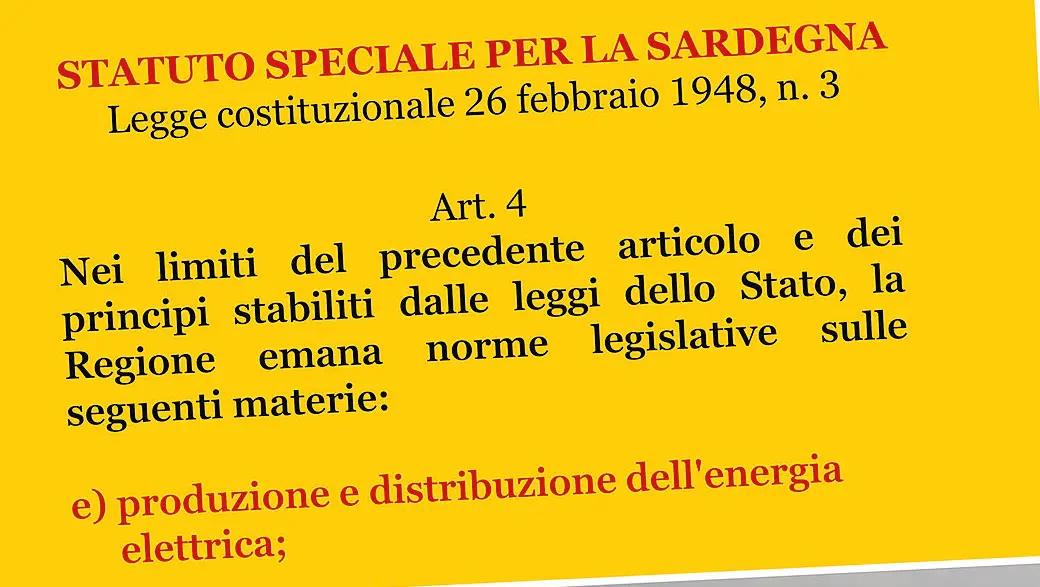
In other words, let's fire the dust. When we begin to jointly discuss articles three and four, those of competences and powers, the army of Ministers is lined up, as if each of them wanted to preserve their scepter on Sardinian land. There were few autonomist powers left, and most had to move within the framework of the State, called to the role of "framer". They reiterate it several times: parliament is destined to outline principles, boundaries and limits, to then leave it to the regions, even more so the special ones, the task of designing and coloring their own autonomy. In theory a large margin. It is a shame, however, that the State did not limit itself to passing "Framework Laws", but decided, through an indolent and greedy exercise of power, to color even the smallest details of the regulatory framework. Almost all the ministers intervene in that discussion-dispute on the matters and powers to be transferred to the Region. Segni, Antonio, the future President of the Republic, then Minister of Agriculture and Forestry, is the only one in the De Gasperi Government who defends a Sardinian competence: the transfer of hunting to the Region. The crossfire is marked by the interventions of Nicola Einaudi, Minister of the Budget and next first Head of State, Amintore Fanfani, Minister of Labor, Mario Scelba, Minister of the Interior. Giulio Andreotti, undersecretary to the Presidency of the Council, even goes so far as to lash out against the exclusive competence over "public performances", initially envisaged for the Region, because, according to the Beelzebub of Italy, it would have violated the cultural unity of the State. It is always the ministerial platoon that capitulates the competence on "antiquities and fine arts" foreseen in the primordial draft.