

More than a sentence it is a slap. What yesterday the Council of State gave to the banker of Europe, who became President of the Council of Ministers, is a lesson in full-blown constitutional law. A decision without appeal. A milestone in the autonomy law of the Sardinian Region. The judges of the highest administrative assembly took care of re-establishing the hierarchy of rules, the relations between the State and the Region. The beating heart of the sentence is punctuated in point 17. A cornerstone of law capable of overturning the centralist mania of the Draghi-formed state: "The Autonomous Region of Sardinia, based on its Statute, has primary legislative competence in regulating landscape aspects- environmental protection of its territory, in this differentiating itself from the Regions to which this competence is not attributed, therefore the aforementioned Region being able to identify, with greater autonomy than the ordinary Regions, the areas not suitable for the establishment of wind power plants considering that the timely application of the lines state guide, vis-à-vis the Autonomous Region of Sardinia, meets the limit of competence inherent in the profiles of landscape protection ».
Autonomous Statute
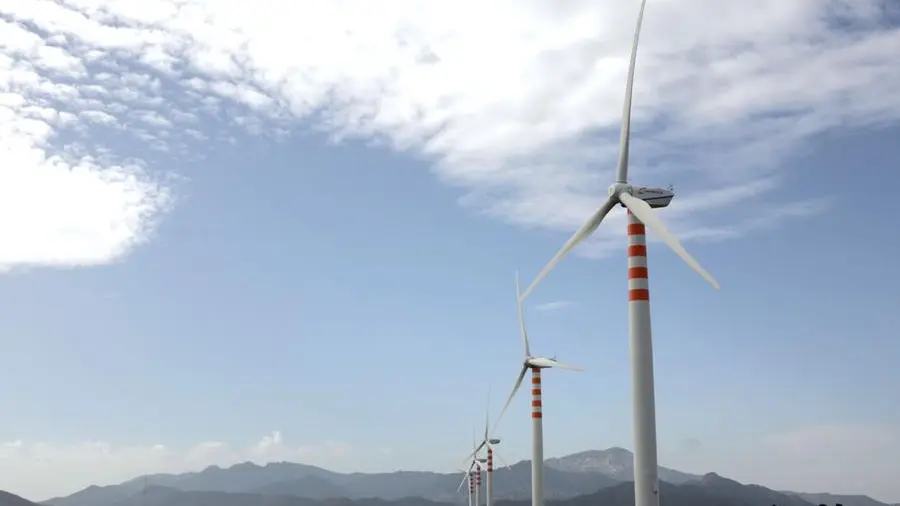
Translated it means that in Sardinia there is still a constitutional law called the "Autonomous Statute" which assigns to the Region wider powers than those of the ordinary Statute. It is a pity that the State, and sometimes the Region itself, have forgotten to apply them. The object of the dispute this time is the aeolian invasion fought with appeals by the lords of the wind. They presented them in every meeting, first to the Regional Administrative Court and then, finally, to the Council of State. The objective was unscrupulous: to drive the mega wind turbines on the enchanted proscenium of the Basilica of Saccargia and in the Nuraghi Valley, in the area between Nulvi and Ploaghe. This time the lords of the usual multinational wind farm wanted to drive a forest of wind turbines 180 meters high, like sixty floors of a skyscraper, between one Nuraghe and another, between the Tombs of the Giants and breathtaking landscapes in the north of the island. An assault on the white weapon inflicting crucifixion on that exclusive and monumental landscape with a mass of cyclopean steel peaks close to the panorama of the most monumental of Sardinian basilicas, a stone's throw from the Doria Castle and the Malaspina Castle in Osilo. After the dry no of the Tar Sardinia yesterday came the one, without appeal, carved in the tables of environmental, landscape and above all constitutional law.