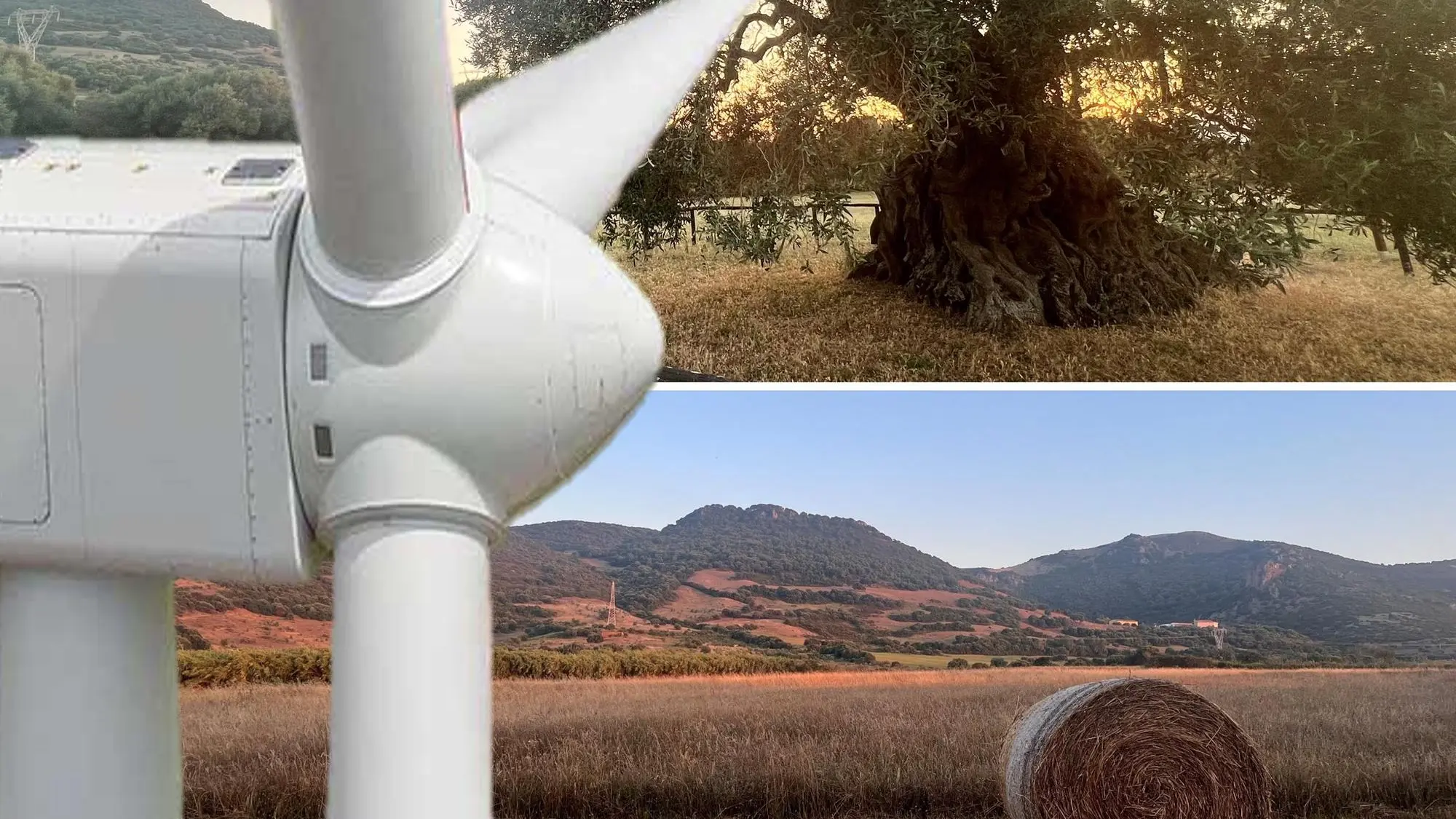


The last frontier to try to "puzzle" the Sardinians is wind tourism. To write that those wind "slicers" are only used to pocket millions and millions of euros in state incentives would have been too shameless. And, in fact, they didn't write it. Never a mention of how much they will earn from that new jungle of wind turbines that without shame and shame they would like to place in the proscenium of S'Ortu Mannu, a natural monument, "reduced", according to the lords of the wind, to a useless tinsel of a few hectares of olive trees . The imagination of those who plan these wind invasions is an ephemeral factory without saving. The game is not only to place an infinite number of them, but also to convince everyone of the goodness of this occupation-expropriation set in the land of Sardinia with too many silences and many complicities.
Who shoots it bigger
The challenge is who shoots the biggest. In Sulcis, with the enchanting imagination, they did not go lightly. The Norwegian multinational “Fred. Olsen Renewables”, which would like to attack the skyline between Villamassargia and Narcao with nine 206-metre-high steel skyscrapers, has certainly broken through to the primacy of the unexplored. The gentlemen who came from the fjords, convinced by who knows who, are certain that in this land of mines and history, sheep farming and agriculture, they are all waiting for the "messiah" complete with tourist fantasies. The emphasis they dedicate to the paragraph on "Wind Tourism" might seem surreal were it not for the fact that those pages are deposited with the Ministry of the Environment in the "Energia Is Coris" project.
Norwegian flag
To tell the truth, the Norwegians arrived first on these ridges, almost as if they had sensed the need to change the front of attack given that between Bitti and Cuglieri, Sanluri and Barumini, the wind rush of Sardinia had reached the effect overlapping, meaning the blades were designing them on top of each other. For this reason, with the logic of identifying virgin areas to attack, the wind seekers who came from Oslo decided to design a "crown" of wind turbines right on the main proscenium of the Iglesiente, as if the orographic conformation of that territory were a real natural amphitheater, from which to "admire" the destruction of those wind turbines.