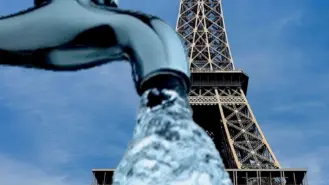


In Paris time and space are measured on water, that of the Seine. The streets are blue, complete with Bateaux Mouches, the cruise rafts that go up and down on the banks of the great river. Water in the city of the Eiffel Tower is like air, flowing everywhere, a kind of cultural icon. Here, in the capital of blue gold, the dispute was fierce. A holy war entirely played out at the highest levels, between Presidents of the Republic and Mayors in pectore. The dispute is written in the sacred texts of the French "grandeur", in the primacy of the European city of water. Jacques Chirac, first mayor of Paris for 18 years and then President of the Republic, had just had time to climb the Elysée Palace before the great torment of Parisians broke out against private water imposed amidst protests and scandals since then future French number one.
The overturning of the water
Bertrand Delanoe, the socialist who in 2001 climbed the government of the French capital, swore it to him. It was in 2010, however, that he decided on the most delicate and imposing challenge: to give back to Parisians the water that Chirac had privatized. In the new electoral challenge, the first point of the program is clear: a stop to private water. Delanoe wins again and in a few months chases away the private individuals. Water returns to the public in the capital of the Seine. The two companies, Veolia and Suez, to which the French President Chirac had entrusted the private government of the water resource declare war, but will not win. The municipality of Paris is reclaiming water governance for all intents and purposes.
Slap to privatization
A slap in the face to the Europe of unbridled liberalizations, wild privatizations, to the prevailing dogma according to which "private is beautiful". It was in those years, however, that the scandals consumed at the time of the "private" management of water also surfaced. The chronicles tell of 90,000 "smart" meters complete with remote sensing of losses. An exorbitant cost made to pay dearly to the Parisians who in reality well knew that the Paris water network was the most advanced in the world and that it did not need those appliances.