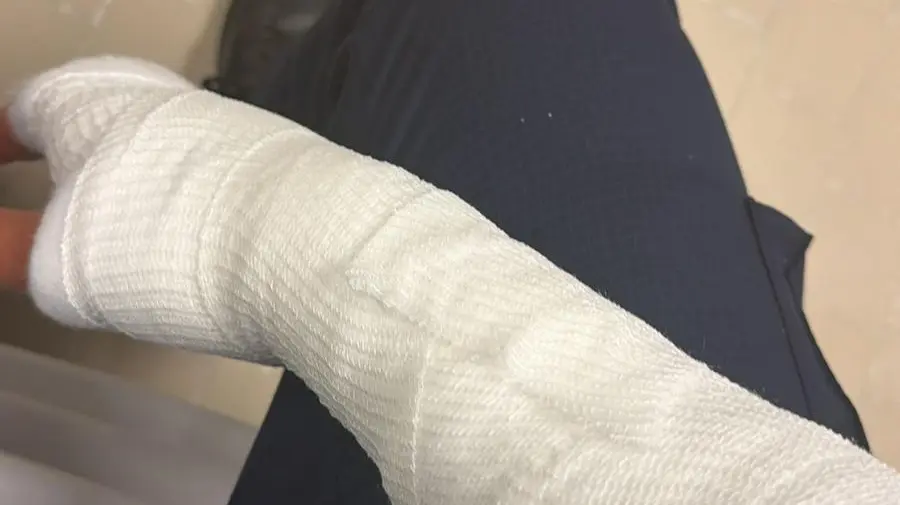


First, water was thrown at a police officer, then a piece of a stick was used against staff, then a slap was delivered through the cell gate. Yet, despite this sequence of aggressive behavior, the inmate was allowed out of his cell for a blood sugar test. And moments later, a prison officer ended up in the emergency room with a trauma to his arm and wrist and an initial prognosis of seven days . This is the summary of what happened yesterday, Wednesday, in Section B of the Uta Prison, in an incident into which the autonomous prison police union (SAPPE) is now calling for full investigation, particularly into the decisions made in managing the inmate and the security measures adopted before the cell was opened.
A situation of evident tension and manifest aggression, which according to the SAPPE should have required particular attention in the management of the subsequent phases: the syndicate's reconstruction begins precisely with the incidents that occurred prior to the attack. The inmate allegedly first threw a bucket of water at an officer and then grabbed a piece of stick, using it against the staff. In an attempt to calm him down and establish a dialogue, a police officer remained outside the cell, but the inmate slapped him through the gate. Around 6:00 PM, the cell was opened to allow the inmate to undergo a blood sugar test. Once the gate was opened, the inmate violently pushed the officer against the gate, causing serious trauma to his arm and wrist. The officer was taken to the emergency room, where his limb was immobilized and he was given a ten-day prognosis .
"We in no way dispute the need to guarantee prisoners the care and medical monitoring they require," says Luca Fais, regional secretary of the Sardinian prison union SAPPE. "We do, however, dispute the need for thorough risk management. If an inmate has just attacked staff, used an object against officers, and slapped a police officer through the gate, the risk cannot be ignored when deciding to open that same cell ," emphasizes the union's Sardinian secretary. "In Italian prisons," he adds, "officers are called upon daily to manage increasingly complex situations, often with reduced staffing and in increasingly aggressive environments. But we cannot accept that staff protection comes after the emergency. If the danger was already clearly evident, all necessary precautions should have been taken before opening the cell," concludes Fais.