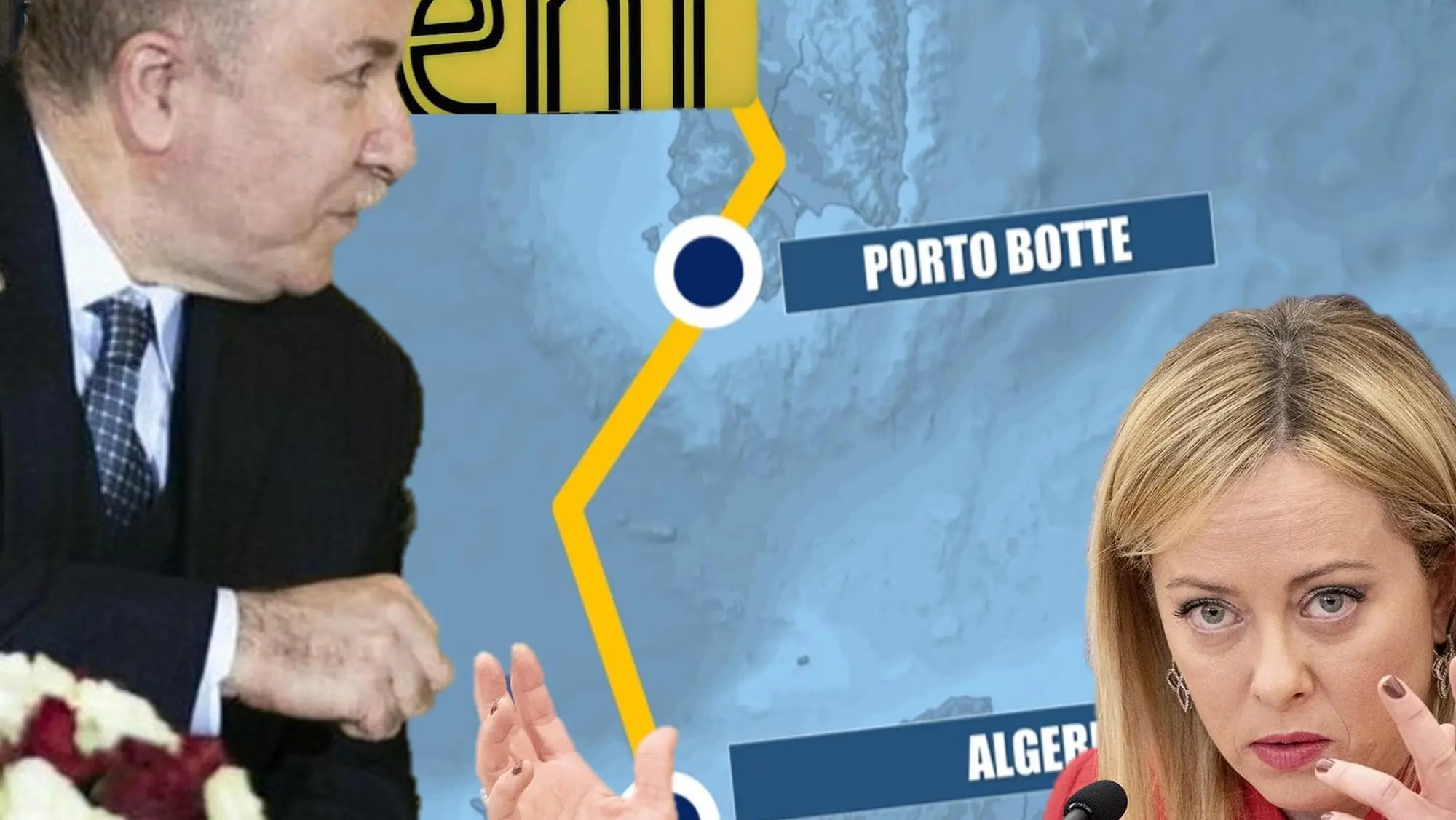


The one that began yesterday in Algiers is, for the Italian Prime Minister Giorgia Meloni, much more than a normal state trip. At stake is not only the official interlocution with the North African government, theoretically closer to the West, but above all the balance of power between states and businesses, between institutions and economic-energy potentates , always more influential than any minister or head of government. The two-day visit to Algiers, therefore, has two variables of no small importance: it can be reduced to a trivial institutional formality, just to seal the business and interests of economic lobbies, or the occasion to outline a new Italian strategy in the chessboard of the Mediterranean. Giorgia Meloni in this mission in North Africa, a lot of her touted sovereign message is played out, on the one hand, and of autonomy from strong powers on the other.
Proof of facts
The proof of the facts in Algeria has burning dossiers, all on standby for some time, as if Italy were afraid to face them so as not to offend the susceptibility on one side of Algeria and on the other of ENI. The keystone of this journey is always ENI. Even the stones know it: Enrico Mattei's energy body in Algeria decides everything, in the name and on behalf of the Italian state. The most eloquent image are the last trips of Draghi and Di Maio to Algeria, both taken by the hand, one at a time and together, effectively taken for a walk, by the CEO of Eni Claudio Descalzi who prompted, perhaps better to say dictated , every half word of the top government. In short, he wrote to them in detail what they should say and, above all, what they shouldn't say.