









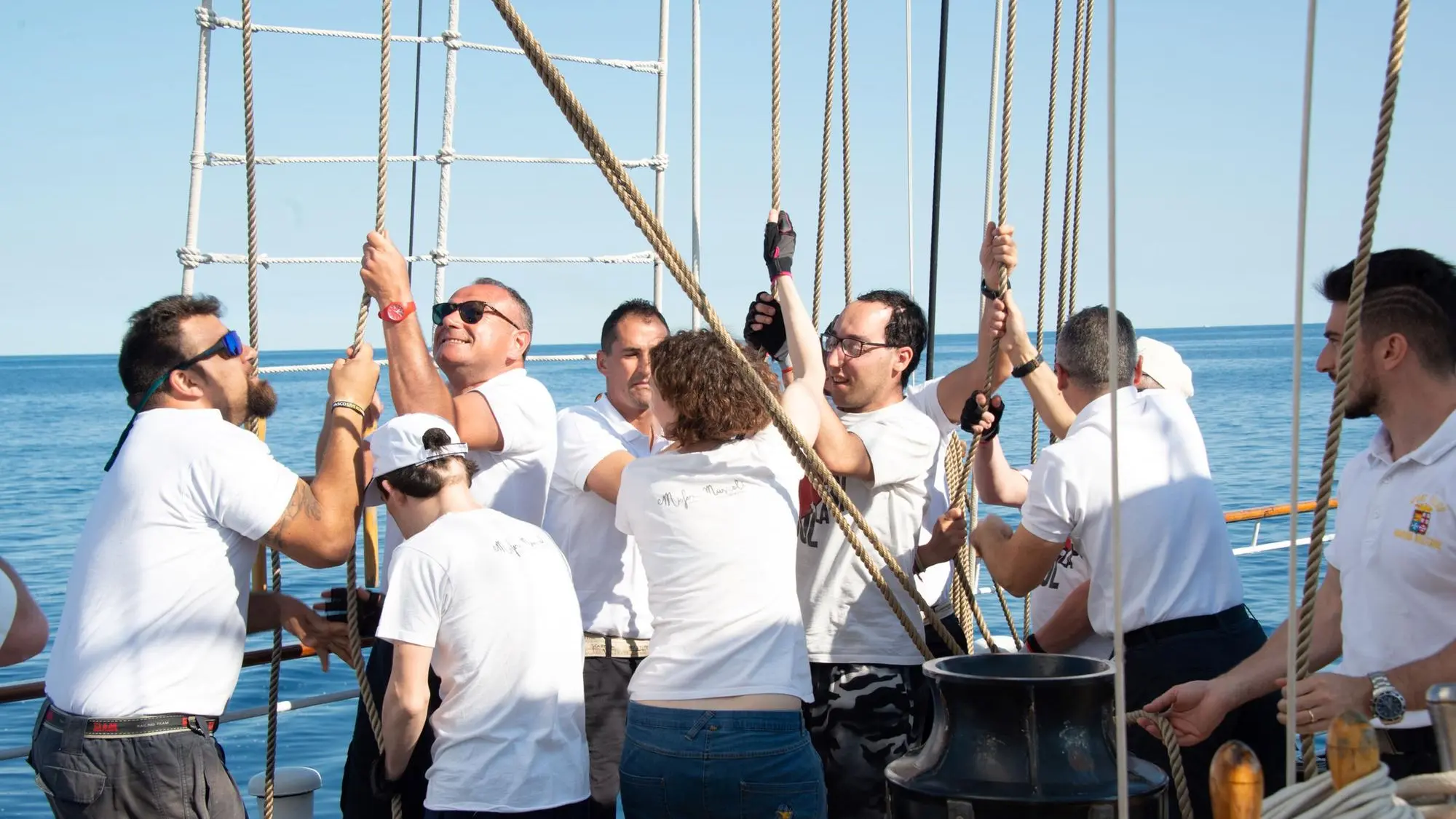


The "Diabetes at sea: how technology can help" project sets sail tomorrow from Cagliari. A challenge to demonstrate how, despite the disease and thanks to the help of new and modern technologies and treatment opportunities, it is possible to lead a life without major complications, even in "complicated" situations such as, precisely, on board a boat .
A program proposed by the Diabete Zero ODV and JANASDIA associations, which since April have launched the annual solidarity campaign promoted by the Tender to Nave Italia Foundation with Nave Italia, the largest sailing brigantine in the world departing from the port of La Spezia.
The project envisages an exceptional collaboration with the Luna Rossa Prada Pirelli team , the Italian challenger at the 37th America's Cup, which for the occasion will open the doors of its Cagliari logistics base to embarkers for a guided tour and will board the brig , during the week of navigation, to create a seafaring laboratory together with the Navy crew .
After a careful selection, completed in December 2022, which saw the scientific committee of the Tender to Nave Italia Foundation engaged in analyzing the applications of around 50 associations, the 23 extraordinary crews were identified, including associations and non-profit organizations of the third sector from all over Italy and also from South Africa, who will sail aboard Nave Italia during the campaign together with the crew of the Navy and the scientific staff of the Foundation, to experience how the Nave Italia method positively affects the well-being of those who live in a discomfort or a disability.
THE CHALLENGE – From 11 to 15 July on board Nave Italia a group of insulin dependent type 1 diabetics, heterogeneous by sex, age and geographical origin, led by a medical team, will have to face the challenge of reconciling the timescales imposed by the disease with those of life on board . This will make it possible to evaluate the ability to adapt and use advanced technologies to get the patient used to managing the disease even away from medical support structures, trying to reduce the obstacles that hinder the already complex disease of diabetes.








