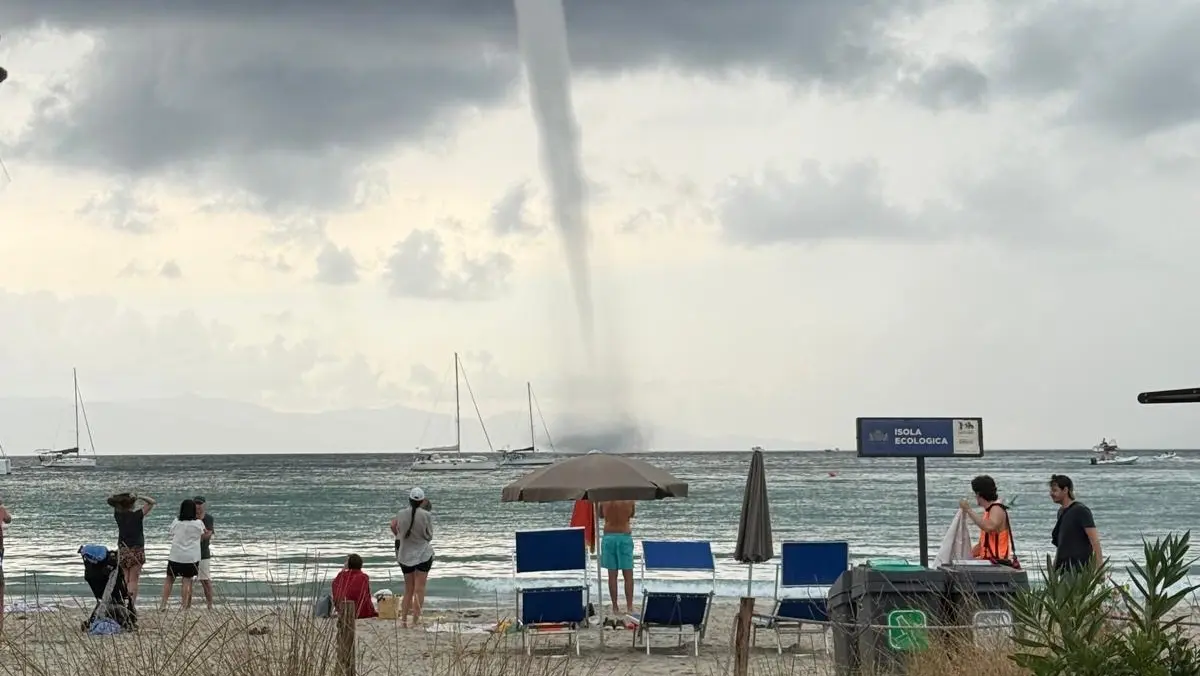


In Sardinia, temperatures are consistently above average, precipitation is increasingly irregular, and sea levels are rising . This is what the new Weather and Climate Report from the ARPAS Meteorological Department reports, based on 2025 data, which highlights how the island's climate "is now manifesting itself with more prolonged heat, concentrated rainfall, and increased intensity of meteorological events."
Here are the previews of the report released by the regional Department of the Environment, pending the full publication of the study on April 10th.
Temperatures: a structural warming in Sardinia – In 2025, temperatures will remain steadily above the 1981–2010 climate average, with an anomaly of +1.3°C for maximum temperatures and +0.8°C for minimum temperatures. The most significant data concerns the month of June, with an anomaly of +4.1°C, representing one of the most significant deviations recorded in recent years. Historical series confirm a now evident trend. After a below-average phase between the 1960s and 1970s and an initial exceedance in the early 2000s, a new phase characterized by increasing anomalies will consolidate starting in 2022.
"The data clearly depict a structural change in the climate, which directly impacts the environmental, economic, and social balance of our region. We are no longer facing episodic phenomena, but a profound and lasting transformation. For this reason, the Region has already initiated an operational phase through the Regional Strategy for Adaptation to Climate Change, strengthening interdepartmental coordination and integrating adaptation into planning and investments," emphasized Rosanna Laconi, Councilor for Environmental Protection, commenting on the numbers.
The heat becomes persistent: fewer peaks, longer duration – Over the course of the year, the report notes, the number of summer days, that is, days when temperatures exceed 30°C, is increasing, now exceeding one hundred per year in the island's inland areas. Along the coasts, a very high number of tropical nights is also confirmed, with temperatures never falling below 20°C and in some areas exceeding one hundred nights per year. What stands out is not only the frequency, but also the duration of the heat. The heat index highlights a longer persistence of thermal discomfort, signaling increasingly less episodic and more persistent heat. Climate risk is thus shifting from peaks to continuous hot conditions, with direct impacts on health, economic activity, and quality of life.