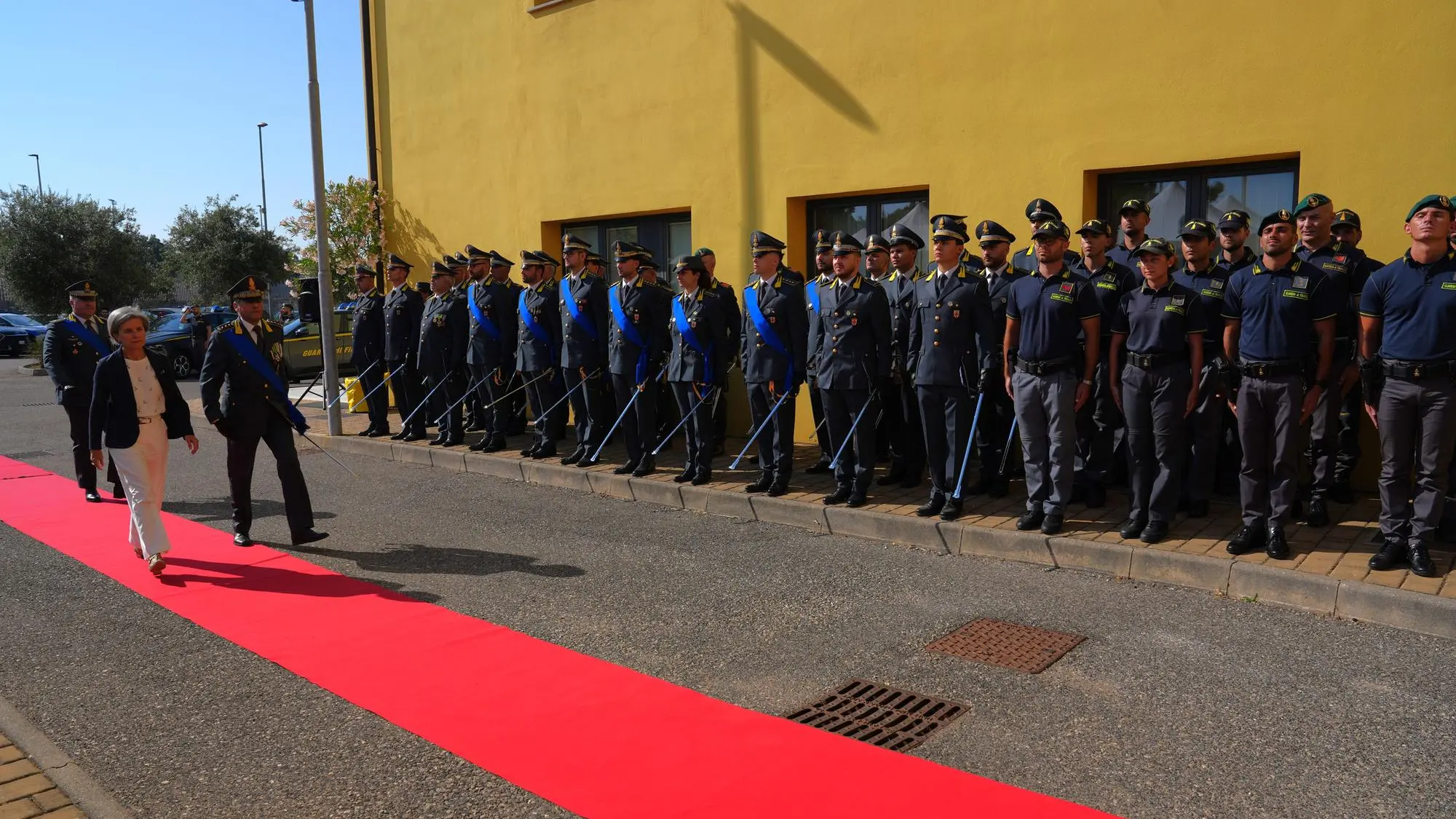


The Sassari Guardia di Finanza (Financial Police) will have conducted 9,500 operations and 660 investigations between 2025 and the first five months of 2026. Colonel Marco Sebastiani, provincial commander of the Guardia di Finanza (Fiamme Gialle), presented these findings this morning at the Corps' barracks on Via Gavino Pinna. 225 investigations into tax fraud and money laundering were underway, with 73 individuals reported for tax crimes. "Over €3 million in assets and financial resources resulting from tax evasion and fraud were seized, and approximately €4 million in non-existent or undue tax credits were discovered," the officer stated during the ceremony marking the 252nd anniversary of the Corps' founding.
Twelve proposals to terminate VAT registrations for businesses considered tax-risk, and those reported for the preventive "freezing" of approximately €1.4 million in undue or non-existent tax credits, the colonel reports, in order to prevent their potential misuse through the offsetting of "real" tax debts. A particular focus is on international tax evasion, including through digital platforms, and the failure to declare capital gains taxable in Italy or accrued in the cryptoasset sector.
"At the same time," the provincial commander continued, "constant vigilance has been ensured in combating the underground economy . Inspections have identified 138 total tax evaders, i.e., those carrying out business or self-employed activities completely unknown to the tax authorities, as well as 225 undeclared or irregular workers, revealing cases of illegal labor outsourcing and undue worker exploitation." Significant interventions have also been implemented to protect public spending and monitor the proper use of European Union and national resources. 448 measures have been implemented across the main spending streams, from procurement to business incentives, from healthcare spending to social security and welfare payments, from European funds to liability for damages to the treasury. As part of the NRRP, Sebastiani continues, "148 interventions were carried out to verify citizens' and businesses' entitlement to tax credits, grants, and financing, as well as the proper execution of works and services subject to public procurement contracts, amounting to approximately 60 million euros."