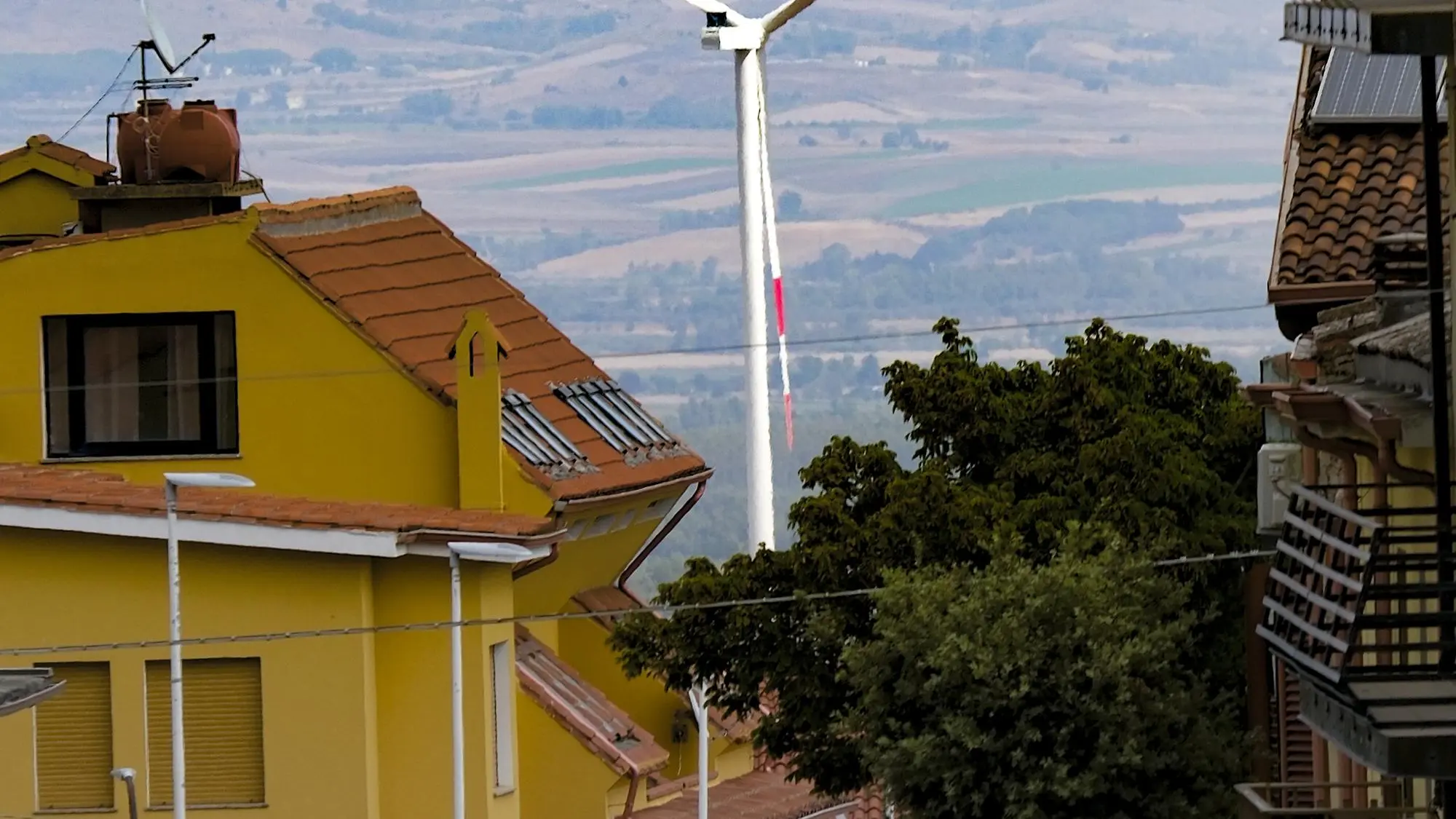


A bill on suitable areas, about a hundred pages long, to be examined and finally approved by early January. And a risk so great that it makes this race against time dramatic: if in the next few days the Constitutional Court were to rule in favor of suspending the moratorium requested by the Government, the few limits that currently prevent renewable energy speculators from submitting requests for the installation of new wind and photovoltaic plants in Sardinia would also disappear. This is the scenario in which the Regional Council finds itself operating, having had the text of the suitable areas in its belly for two days.
Let's go
The Urban Planning Commission chaired by Roberto Li Gioi (M5S) starts on Wednesday with the hearing of the competent assessors, and continues in the following days with the listening of all the stakeholders, including the mayors and the Committees. Everyone is busy reading the attachments to the bill approved last Thursday in the Council. The mayors remain cautious. The problem is that a map of suitable areas does not exist and will not exist: the implementing provision of the Pichetto Fratin decree offers an analysis of the criteria and conditions that the territories must respect to be defined as suitable, unsuitable, ordinary. In practice, declared the president Alessandra Todde, «the majority of the Sardinian territory will not be suitable to host plants for the production of renewable energy».
The knots
But his words were not enough to dispel all the doubts of the mayors, of the Campo Largo councilors themselves and obviously of the opposition. Among others, there is a passage in the text that does not convince a good part of the majority, and it is the one inserted in article 3 on the possibility of municipalities to request the installation of a plant even within an area identified as unsuitable. The request for exemption would then be decided by the city council not before a "public debate" involving the populations concerned. An article that has caused discussion, and which some members of the majority have immediately asked for its removal. Other strong doubts about the buffer zone between plants and archaeological sites. The national law provides for a range between two and seven kilometers. But the council has chosen the minimum threshold of two kilometers. Why? And again: in the bill it is written that "specific types of plants are prohibited in unsuitable areas even if the authorization is in progress. But again from the majority someone points out that the authorizations are the responsibility of the ministry. How can a regional law revoke them? Isn't there a risk of litigation?