









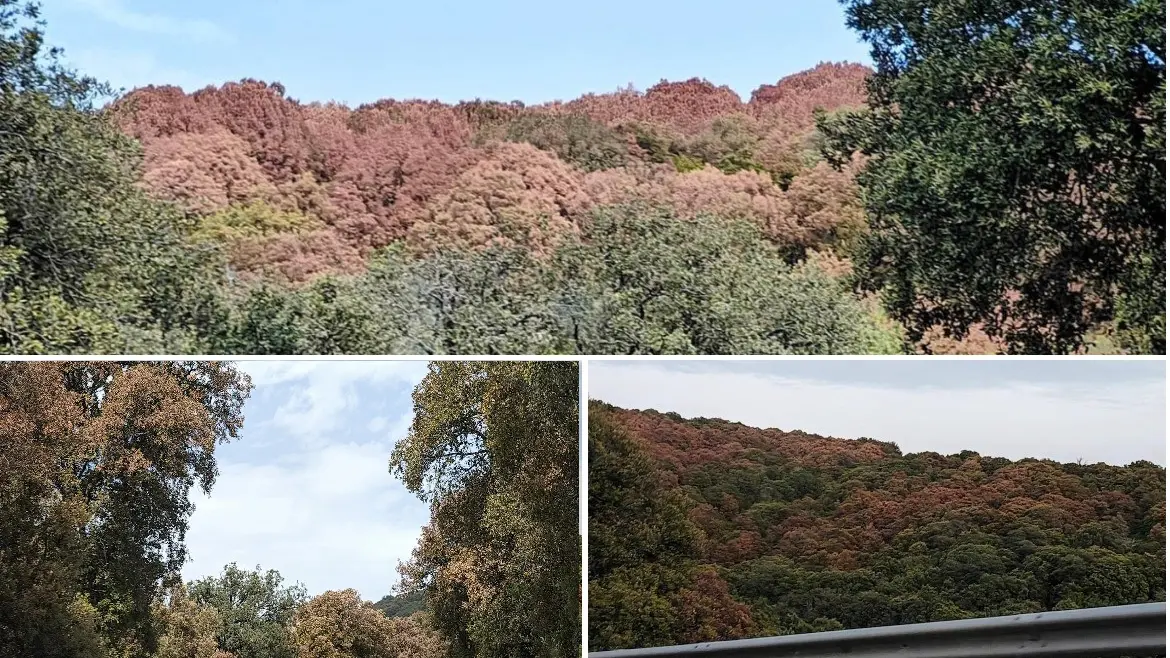


The first symptoms were seen in Sarrabus and Gerrei. Then up towards Ogliastra and Gallura. Some spots also in Supramonte. Now the dark disease that is making the woods of Sardinia yellow-brown is moving further and further inland.
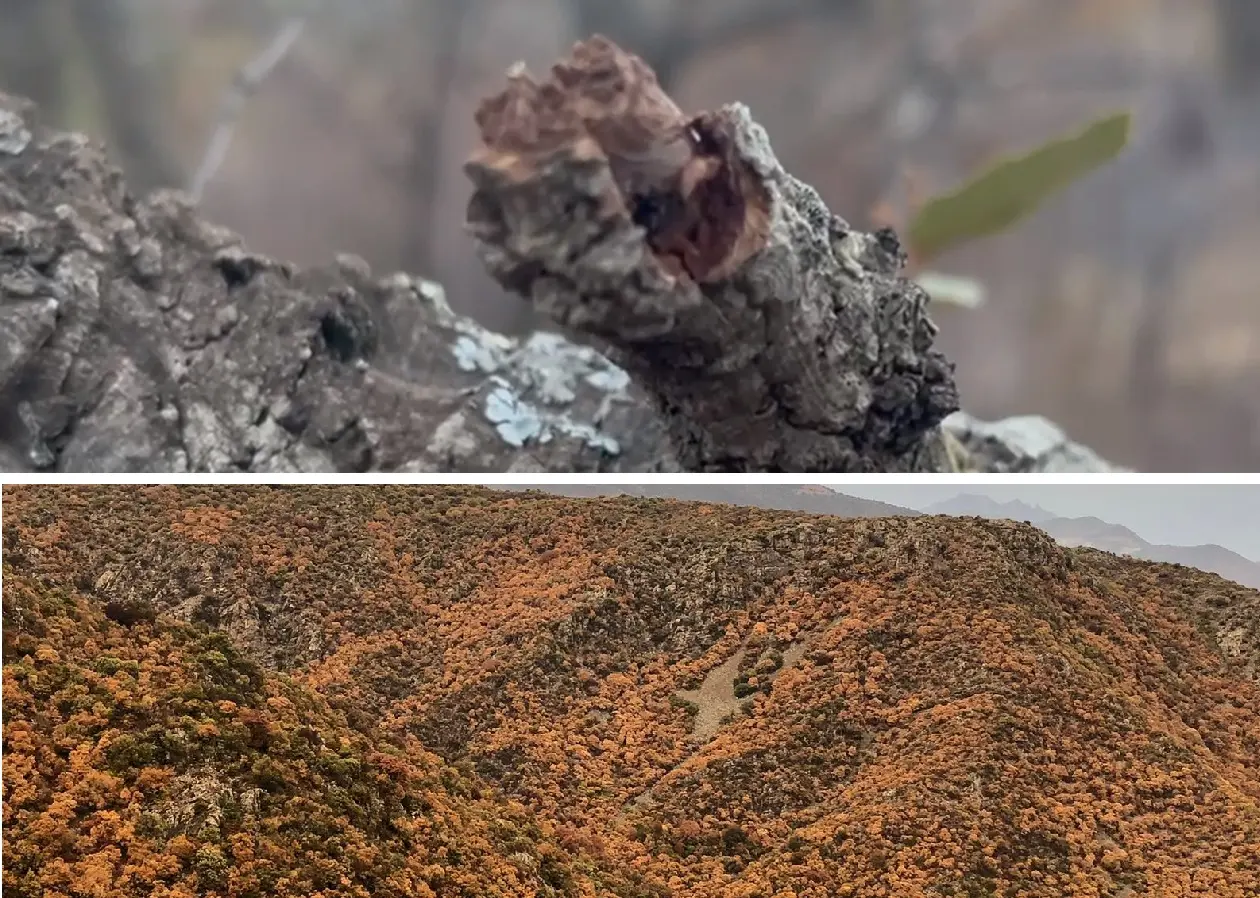
The images come from the forest of Santa Maria a Sadali, Barbagia di Seulo. For its springs they call it the town of water and a short distance from these sick woods there is the great lake of Flumendosa, a basin that is suffering less than others from the water crisis that is gripping Sardinia. Yet even here the historic greenery is disappearing to make room for the "siccagna", the evil of this summer 2024.
"Seeing entire sections of forest dying causes excruciating suffering," says the town's former mayor and former parliamentarian, Romina Mura.
The causes of the phenomenon?
The representatives of the Regional Phytosanitary Technical Table tried to explain it to her in a letter sent to the Unione Sarda.
Below is the text.
The forest formations of Sardinia are currently affected by two distinct phenomena: the leaf drying of the forest formations mainly in the eastern sector of the island and the decline of the cork oak (Quercus suber). Both these phenomena, although manifesting themselves with different symptoms and causes, represent a threat to the Sardinian forest ecosystems and, therefore, imply an interdisciplinary approach.
The phenomenon of desiccation and browning of the canopies, observed in the holm oak forests and in the Mediterranean scrub formations of eastern Sardinia, seems to be closely linked to the prolonged water deficit caused by the decrease in rainfall in recent years. In particular, the summer of 2024 marked a critical point with a strongly negative water balance. However, to fully understand the extent and intensity of the problem, it will be necessary to monitor the vegetative responses after the autumn rains and evaluate the presence of any concomitant factors, including harmful organisms and opportunistic parasites.
The phenomenon of cork oak decline, a problem known for decades, continues to be a concern at international level. Studies started in the 1980s document a progressive decline of cork oak forests in several regions of the Mediterranean, including Sardinia. This phenomenon is often the result of a combination of abiotic factors, such as site and management conditions, prolonged drought, alteration of rainfall regime and increased heat waves, together with biotic factors, including insect attacks and infections by pathogens.
Cork oak decline manifests itself through a wide range of symptoms, which vary according to the abiotic and biotic factors involved, making it difficult to make an accurate diagnosis without a more in-depth analysis. The symptoms of decline manifest themselves in two main ways: a chronic decline, characterized by symptoms that persist for years, and an acute form or sudden death, marked by the sudden drying out of the plant.
Phytophagous insects, such as Lepidoptera and Coleoptera, contribute to decline by directly damaging plant tissues and carrying pathogens. These insects can worsen the condition of plants, already weakened by unfavorable environmental conditions and other biotic stress factors. However, it is essential to underline that abiotic agents, in particular drought and high temperatures, play a crucial role in predisposing oaks to biotic attacks, creating a vicious circle that leads to the progressive decline of cork oak forests.
Among pathogens, an increasingly important role in the decline of cork oak is played by some species of the genus Phytophthora. These microorganisms, despite their morphological similarity, are not true fungi, but belong to the class of Oomycetes, known for their ability to attack the root system of plants. Infections by these pathogens cause necrotic lesions on the roots and the loss of root hairs, drastically reducing the ability of plants to absorb water and nutrients, and making them less tolerant to water stress.
At the same time, intense heat waves and prolonged periods of drought (such as those we have been experiencing in recent years) make plants more susceptible to attack by parasites, such as various fungi belonging to the Botryosphaeriaceae family, including Diplodia corticola, an agent of cankers and necrosis on the trunk and branches of plants, which is taking on an increasingly significant role. Finally, plants in an advanced state of decay are susceptible to attacks by the opportunistic pathogen Biscogniauxia mediterranea, the causal agent of carbon canker, a disease that affects the trunk and branches.
In light of these phenomena, it becomes essential to establish and strengthen a permanent monitoring network in the forest areas of Sardinia, through close collaboration between regional institutions and research bodies. These collaborations, to date, have led to significant progress in the understanding of the phytopathological and entomological phenomena that affect Sardinian forests, allowing the implementation of targeted management actions. The creation of regional coordination tables, such as the Forestry Phytosanitary Technical Table, and the drafting of the National Cork Plan in 2023, which pays particular attention to the phytosanitary aspects and resilience of cork oak forests, are concrete examples of how Sardinia is facing the great challenges posed by climate change and the spread of infections and infestations, which go beyond local borders, assuming a relevance of global interest.
These initiatives, also supported by community projects that promote research and the exchange of good practices in the management of Mediterranean forests, are essential to strengthen the protection of Sardinian forests and preserve their biodiversity. Only through a concerted effort, based on research and responsible management of forests, will it be possible to guarantee the conservation of the invaluable natural heritage for future generations.
(Unioneonlne/E.Fr.)








