









In any self-respecting war chessboard, first of all, airports must be occupied. It is the golden rule of any military strategy to conquer territories, markets and power. Getting your hands on the doors of the promised land is the beginning of every climb. Let alone what it means to grab an airport on an island, in the middle of the Mare Nostrum, a few miles from the African shore, many more from the Italian one. Defending the landing and take-off garrison for an economy that aspires to tourist development is, therefore, like safeguarding water and oxygen. Without those runways, without their control, one becomes a prisoner of distant logic and overseas business. Buying an airport means getting your hands on the development of a region, a territory, or a nerve center on the economic chessboard.
Porto Canale docet
Without going too far, a stone's throw from the Cagliari-Elmas track, Porto Canale was the dramatic testimony of this. Management totally delegated to a company engaged in other Italian and African ports, Contship, with a clear objective: to keep the Sardinian structure in check to favor those of La Spezia and Tangier in Morocco. Any geographical-logistic centrality vanishes if the interpreters have other objectives and above all other interests. In that case, let the Cagliari port die and take off the African and Ligurian ones, today at the top of all the growth rankings. For the airport of Cagliari, and in general for the airport structure of Sardinia, the scenario is one of large-scale encirclement, with the removal of the island and the Sardinians of the governance of one of the fundamental tools for development and economic growth.
House keys
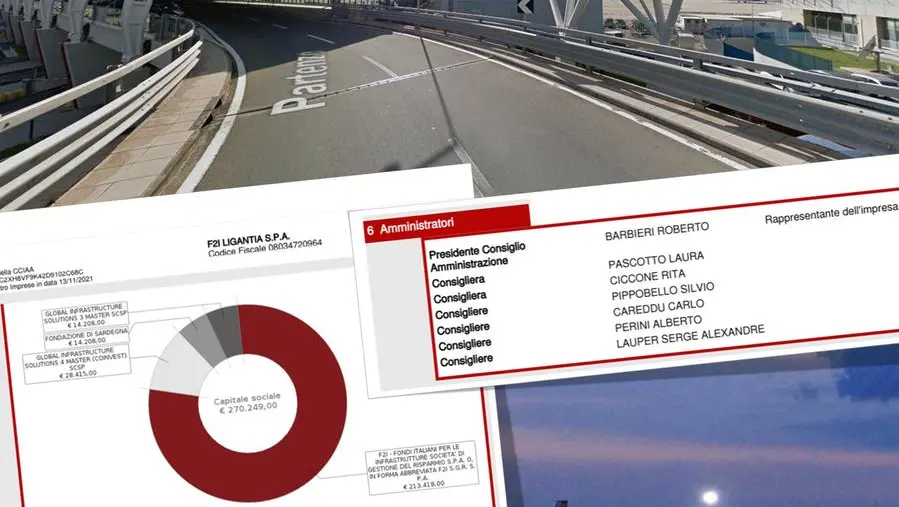
Entrusting the house keys to subjects unrelated to the island's economy, and a thousand miles away from the general public interest, means no longer being the masters and decision makers of one's own future. On the shores of the Cagliari airport, lying on the Santa Gilla pond, the great maneuvers had long been underground, until the publication of our investigation with those documents that made official the landing in the corporate structure of the F2i airport, one of the most impressive companies of Italian financial savings management. Of course, F2i has just 0.209%, apparently insignificant, but which, precisely due to the impact of the subject, with assets under management of over 6 billion euros, constitutes the potential enclave with which to attempt the climb. Now that the secret and confidential plans are over, it is much more difficult to put a capital increase on paper in print. In light of the current regulations, not only is it not mandatory, not even to cover the losses of two million and 389 thousand euros, after the pandemic, but it would be very difficult to get explained and accepted by the supervisory bodies themselves.