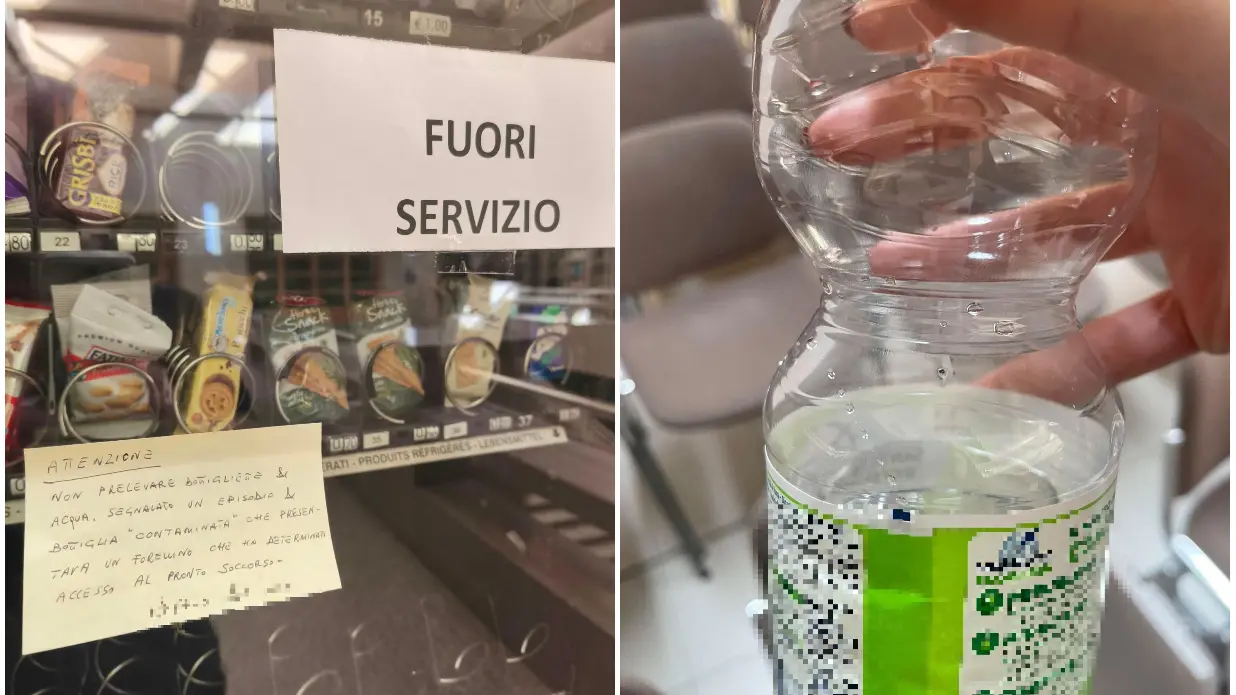


"The water had a sweetish taste, it tasted like sweetened almond milk. At first I didn't think anything of it, but then I felt sick." This, in a nutshell, is what the young intern at the Cagliari Court of Appeal told her colleagues and the Carabinieri. On Wednesday afternoon, she felt ill after drinking from a bottle of water that was later found to have been tampered with. Discharged from the emergency room, fortunately in good condition, she was interviewed yesterday morning at the Carabinieri Judicial Police Section. The bottle, it was later learned, had two tiny holes, likely made with a syringe needle and then sealed: one on the cap and one on the side. The young woman's mother also apparently took a sip from the same bottle and felt slightly unwell, which later subsided.
The reconstruction
After drinking a few sips of water, the girl felt a burning sensation in her throat, her ear became blocked, and she reported feeling very unwell, requiring her to be taken to the emergency room. After purchasing the bottle from one of the building's vending machines (which was immediately blocked), the young woman allegedly put it in her bag and took it with her to a class. The Carabinieri of the section based in the Palace of Justice, coordinated by Colonel Marcello Sardu, and their colleagues from the Anti-Adult Food Safety Unit, who were immediately alerted, will now have to determine at what stage the plastic packaging may have been tampered with.
The investigations
The bottle, which still contained water, was seized by the police, who are investigating the case on suspicion of adulteration and counterfeiting of food substances, a crime punishable by a maximum sentence of 10 years. Analysis of the remaining liquid will now clarify what substance was introduced, in what quantity, and what concrete health risks the young woman faced. These investigations are far from simple, given the complexity of the investigation. It's impossible at this time to determine when the plastic bottle was tampered with. Many people, however, inevitably recall the "Acquabomber" incidents that occurred in the mid-2000s, which caused alarm in various parts of Italy. In that case, insulin had been injected into the bottles. However, for now, these are merely suggestions and not investigative hypotheses.