









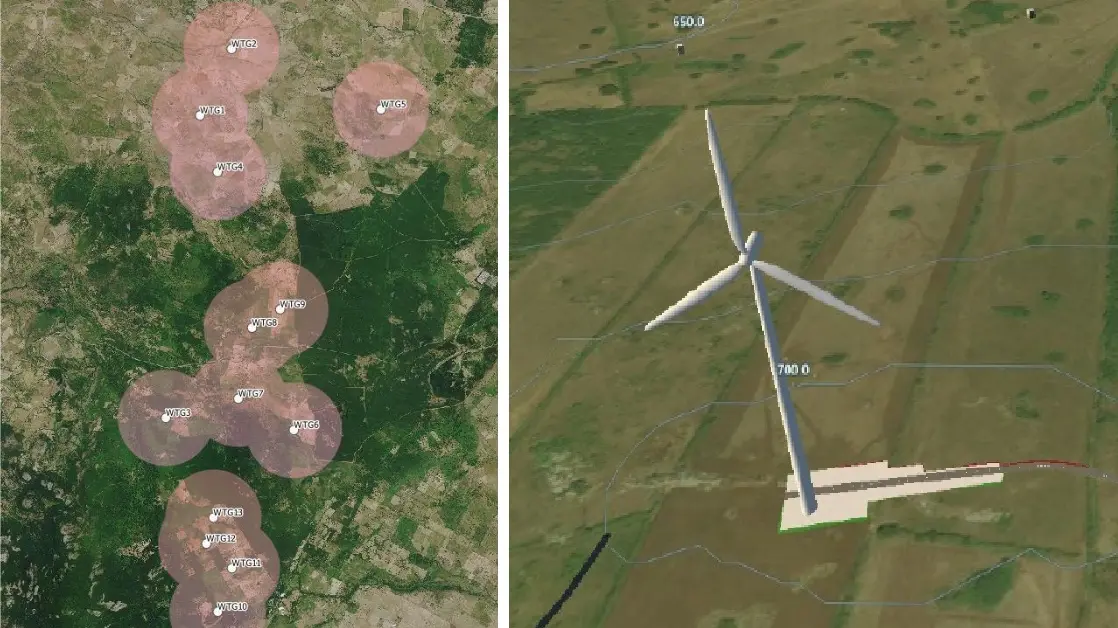


An inestimable and intangible value? No: the Sardinian landscape has a price and it seems it could be sacrificed on the altar of the astonishing sums that are promised for the territory. To calculate it there is also a sort of tariff. How much is it worth? If agricultural: 89 euros per hectare, for one year. That is: 24 cents a day. An (insignificant) figure, obviously, estimated by those who want to overturn that landscape - protected by the Constitution - with thousands of shovels.
Thirteen of these, 200 meters high, Enel Green Power wants to install between Sindia, Santu Lussurgiu, Borore, Scano di Montiferro and Macomer (territories affected by rotors and related works). The procedure before the Ministry of the Environment and Energy Security is already at an advanced stage, so much so that the deadline for submitting observations expires on 19 June. The Region has long presented its own: 224 pages of criticism. And among the impressive amount of documents there is also the cost/benefit analysis carried out by the company.
Reference is made to the “impact path” of the wind farm. That if at a global level they are on "atmosphere, consumption of non-renewable resources, public health and biodiversity" , they specifically concern "landscape, noise, fauna, loss of ecosystem services, use and occupation of land, limitations on building rights and social component -economic".
It must be said immediately, also because it is obvious: in the relationship between costs and benefits, society estimates the latter as enormously superior to the former. In 30 years (average duration of a wind farm) 140 million benefits are calculated (of which 131,040,000 would derive from public health gained and reduced atmospheric emissions and 5 destined for local workers) and just 41 in costs for the territory .
Among the voices of the latter there is, in fact, the landscape. Which for the area affected by Enel's project is considered "agricultural". F The landscape, based on an OECD report, . That is, including the natural components (i.e. flora, fauna, habitats and ecosystems), the use of the land (crops and cultivation systems), the anthropic artefacts or traditional textures (i.e. hedges, dry stone walls, built historical)". Then that is, places of life, work, leisure, including ecosystem services". And again concerning the costs of maintaining the landscape by farmers and the value that society attributes to the rural landscape, in terms of cultural and recreational value".








