









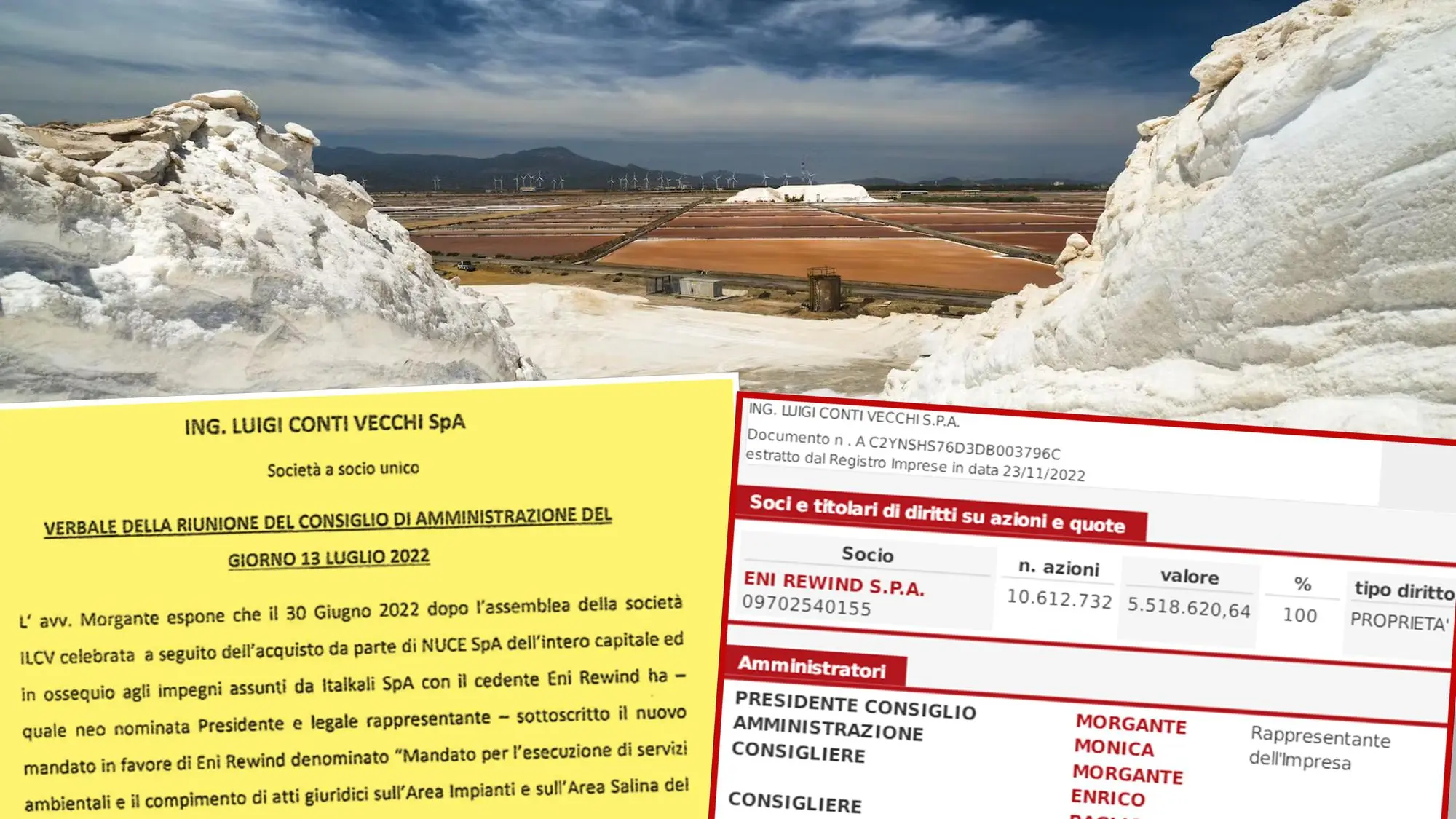


Santa Gilla, gates of Cagliari, expanse of white gold on the slopes of Monte Arcosu. Registered office for a little while longer in Macchiareddu, a para-industrial enclave between colonies of pink flamingos and immense salt lagoons. Public concession, only nominally, of the Autonomous Region of Sardinia. For the rest, ENI, the state's oil dominus, has always taken care of doing and undoing here, with its long arm over Sardinian salt. In this strip of land reclaimed 100 years ago from malaria by the ingenuity of Luigi Conti Vecchi, Eni, however, cannot rest.
Disposable
Ever since the world began, Sardinia has always been considered a sort of disposable land, where you can consume the most profitable business and then, without firing a shot, run away. Very often with the complicity of the guardians of the regional autonomy. The history of the salt pans of Cagliari, which have always been dedicated to the engineer Luigi Conti Vecchi, from whom the homonymous joint-stock company still takes its name, is now at the center of a real corporate yellow, all consumed in the silence of the institutions, starting from the regional ones. That Eni wanted to get rid of this heritage is written in the documents of the last ten years. A disengagement that culminated this summer with the shares, all underground, aimed at "selling" the concession for the salt pans, which had just been replenished by a substantial renewal for a further twenty-seven years. An act initiated by the Pigliaru junta, complete with salaams consumed with the top management of ENI in the white expanses of Santa Gilla, and then endorsed by the current regional executive who even declared himself unaware of the "saline" maneuvers of the State body. A renewal procedure that still today has many dark sides, starting from the duration of the concession itself, given that the regional provisions had sanctioned, and applied, a maximum duration of 15 years for all the other saltworks.








