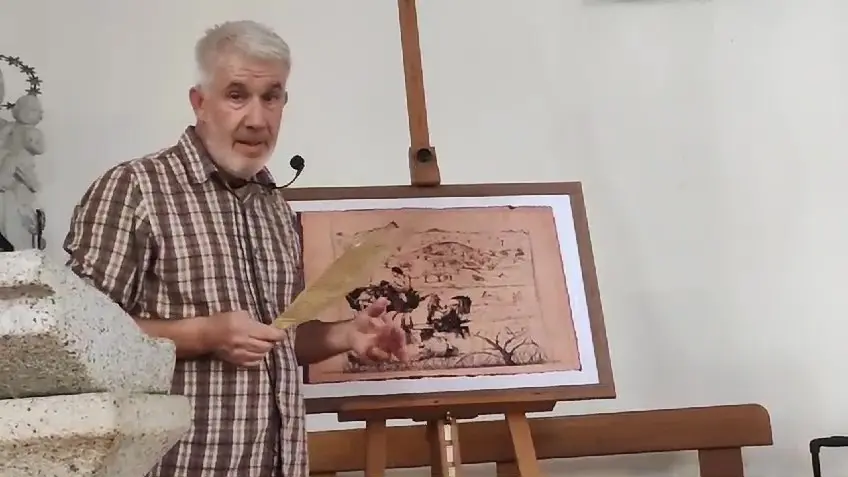


«A more emotional than scientific journey», defined it as Mario Sotgiu, curator of the exhibition “The reckless travelers of the 19th century” , inaugurated in Arzachena last Friday and dedicated, as stated by the president of the “La Scatola del Tempo” association, « to discover those who in the 19th century, demonstrating incredible courage and not following the aristocratic fashions of the Grand Tour, crossed the ancient and hostile land of Sardinia, describing it and/or telling it in a thousand different, intimate and personal ways".
The exhibition focuses attention, in particular, on what travelers from two centuries ago wrote about Arzachena and the surrounding areas.
Thus we discovered, for example, with the Englishman Daniel Roberts, that in 1833, in Porto Cervo, there was «a pink and sandy beach, which has a large quantity of chopped coral». Roberts who, speaking of the «Gulf of Arsaikena», described it as «certainly the most beautiful place I have seen in Sardinia so far. The distant mountains, the trees, the curious shape of some rocks in the distance. The land in the valley is well cultivated, there are two excellent water sources, there is a marsh with ducks and other waterfowl. I found the locals very civilized, they gave me excellent butter and other things."
Nineteenth-century travelers also spoke of the festivals, such as William Henry Smith, in “Relations on the Island of Sardinia” in 1822, who, after describing the «chapel of Santa Maria», spoke of the ongoing festival, «regulated by a company of 30-40 shepherd leaders. A large multitude of people had flocked there from all over: some were busy killing and hanging the animals destined for the banquet from the branches of the trees, others had already started roasting them."
Thomas Forester in 1858, describes a «wonderful tree-lined hill with trees at the top, dedicated to Santa Maria di Arzachena, one of the most venerated sanctuaries by the Gallura people. People flock to these sacred places in large numbers for the holidays; on this occasion these solitary places, almost always on top of the hills and surrounded by wild romantic scenery, become witnesses of devotion and celebrations, of which revelry is the most evident manifestation".