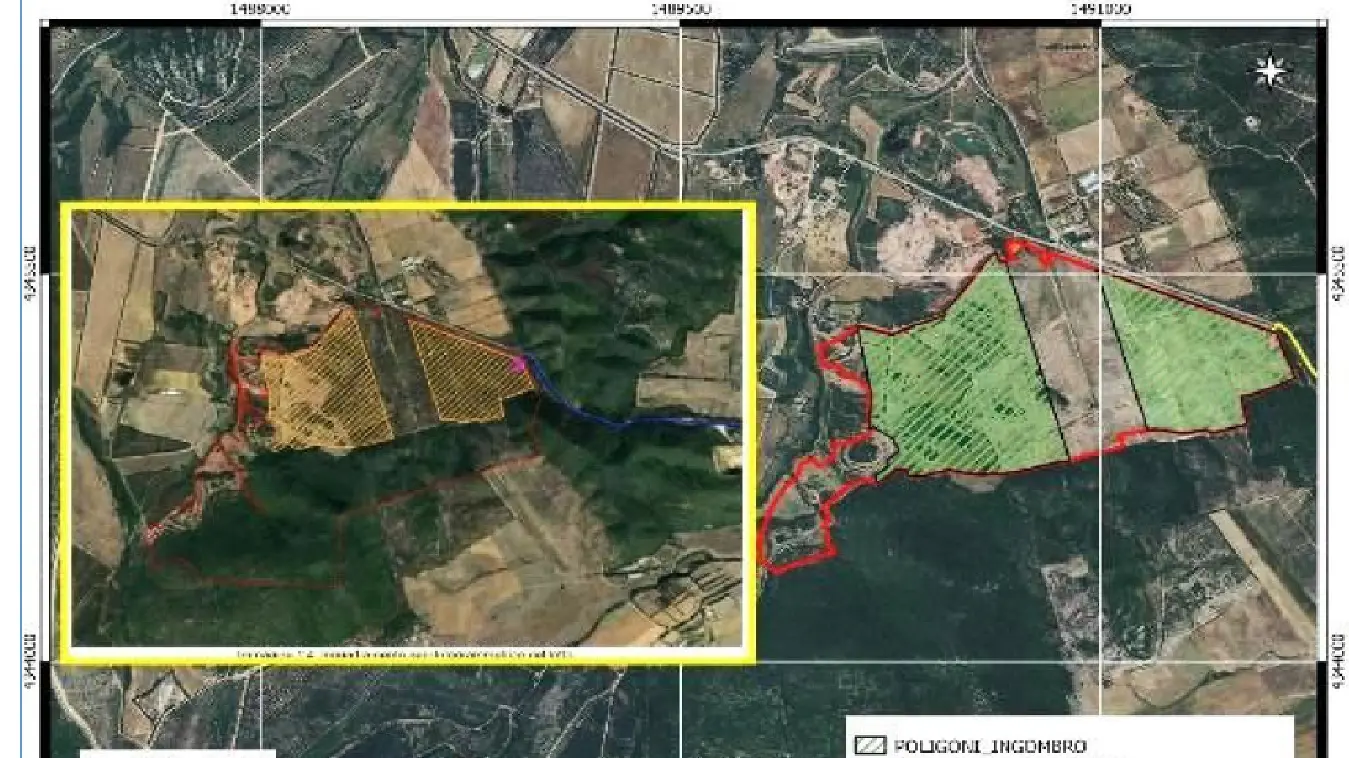


The ministerial offices had defined it as "incomplete, confused, at times incoherent. Incongruent". And they had rejected it. Now the company Diomede Srl of Rome has filed an appeal with the TAR against the negative opinion of the Mase issued last November 7 on the project for a maxi photovoltaic plant in Serra Taccori, in the territory of Uta: over 130 thousand silicon panels on over 40 hectares of land.
The Legal Intervention Group has announced the challenge to the measure: «In addition to the shortcomings in the design and analysis of the territory», the association explains, «which emerged during the EIA procedure, the identified area is an example of the typical archaeological landscape of Sardinia». Thus, after the observations presented during the authorization process, the Grig announces that «it will also do its part before the TAR Sardinia for the defense of the rural archaeological landscape of the Sardinian territory concerned, which cannot and must not be subjected - like the rest of Italy - to an industrial energy monoculture that is clearly oversized compared to real needs».
Sifting through the immense mass of documents filed to formulate the negative assessment, one comes across heavy objections raised on the plant itself, on the risks for the landscape, but also on the cumulative impact: a short distance away, again in Uta, there is another immense expanse of panels. And the opinion of the ministerial technicians also looked at those: too many, Sardinia risks an invasion.
The project
The ministerial procedure went on for two years: the company had submitted the application on October 10, 2022. At first, the park should have had even more impact than the one that was rejected: the overall extension planned was 2,207,790 square meters. But after reading the first documents, a long sequence of negative opinions rained down, even from various offices of the Region. Among other things, the Department of Urban Planning had emphasized that part of the plant would fall in an unsuitable area due to archaeological interference. For what it was worth, this objection, together with others, had contributed to a rewriting of the plan.