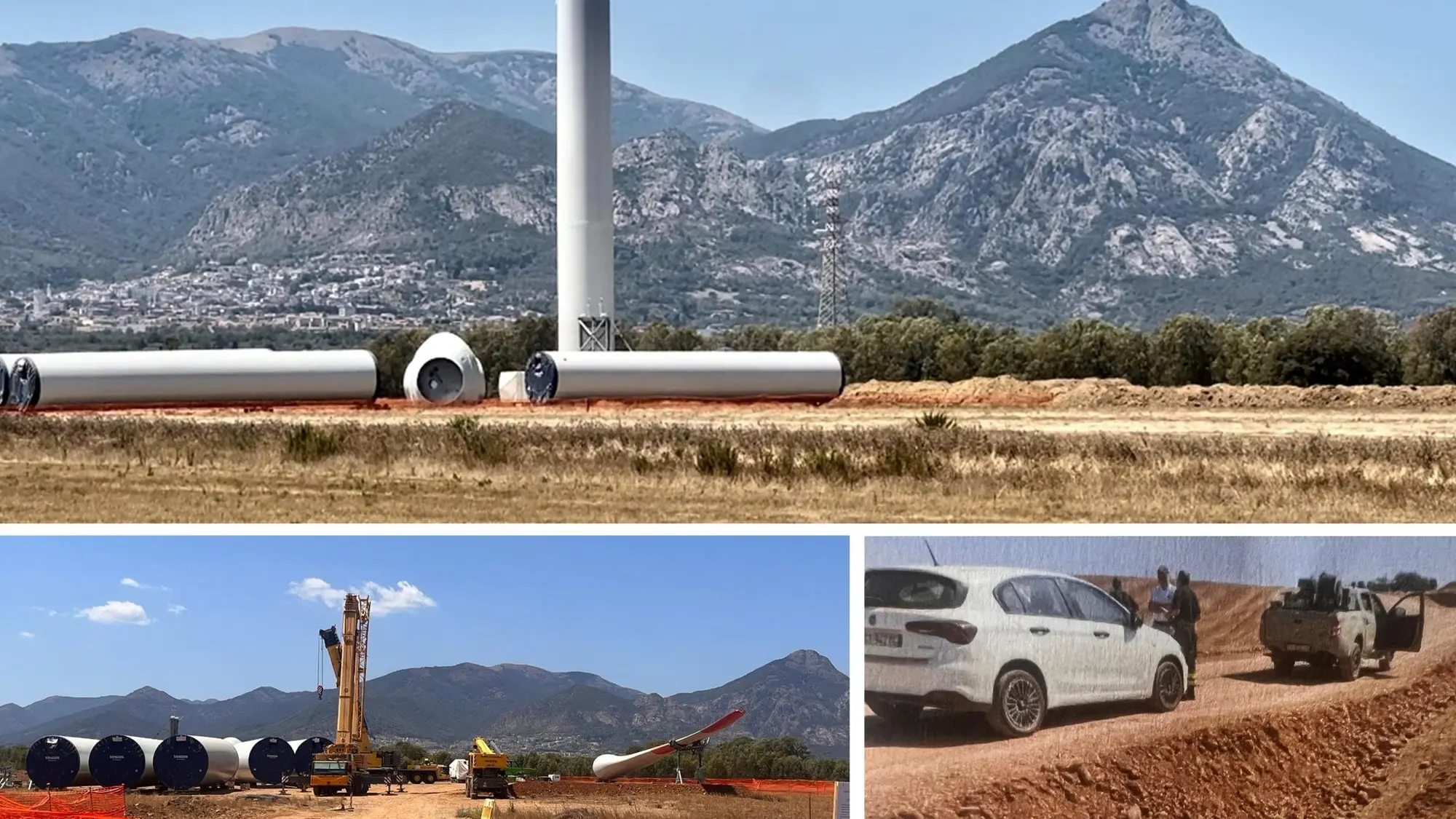


They arrived at the slopes of Mount Linas with bulldozers and excavators, like the Piedmontese of old. They have not read the “Paese d'ombre” and are completely unaware of the history of those forests plundered in the name of the Savoy kingdom and the Tuscan charcoal burners. Here, in Villacidro, says the literary patriarch Giuseppe Dessì, «they had never tolerated masters». «Harsh and sometimes even mean people» says the writer-philosopher, explaining that the violence and abuse suffered by unscrupulous “foreigners” had almost genetically shaped the character and nature of the people of Mount Linas.
Piedmontese novels
The new “Piedmontese of the wind”, now landed from Cuneo in the land of the Campidano di mezzo, had never read anything about the “bloody” history of the defense of Villacidro. It is understandable, after all, for those who have been accustomed by history not to knock when entering other people’s homes. The laws of the Italian State, however, at least those, they should have read, and perhaps even respected. They should have known, for example, that watercourses are not blocked, roads are not built in areas at risk of hydrogeological disaster, canals are not filled without asking permission. They should have known that here, in one of the largest communal lands on the island, the “civic lands” are sacred. They should have, indeed. The “Franciscan” arrival of these new “fans” of northern Italy in the land of citrus and cherries, with so many business ramifications scattered here and there, was even accompanied by a singular press release that almost seemed to announce the “beatification” of so many wind turbines in the presence of the great mountain. They complained, with the grace of the Caterpillars that leveled Santu Miali, of the criticisms leveled at the wind operation on Mount Linas by an investigation by our newspaper.
“Franciscan” well-being
They invoked understanding and thanks for the “well-being” that they were about to “grant” with both hands on that stage, according to them, full of desperation and desolation. Then, waking up disheveled from an “ungrateful” welcome, in the dusty construction site, they found the Forestry rangers and the Civil Engineering engineers. The report drawn up by the officials of the Regional Directorate of Public Works thunders repeated abuses, as if they had mistaken that area for a “no man’s land” to be defaced with impunity in the waterways and in the hydrogeological structure. Yet in the maps of the Hydrogeological Structure Plan, a blue “stain” was evident, marked by a dangerous constraint linked to the hydrographic conformation of the entire area, it matters little if the shovels had been positioned, after repeated modifications, in very modest enclaves where the risk had been placed at the borders.