

They can be glimpsed everywhere, in the land of the Nuraghi. Climb walls to mark the boundaries of rivers and locks. Perched on the steepest edges, multiform sculptures, with fruits set like the sun and the wind, have arranged the "meandering" paths of the island far and wide. As often happens, as if everything were taken for granted, what is the most fruitful expression of nature becomes usual indifference, despite the goodness that appears before the traveler's eyes.
Sacred plant
Yet, on this island sculpted like a diamond with a thousand carats and immense facets, each different from the other, there are those who have understood the profound value of that "sacred plant": the prickly pear. The "green gold", the "plant of the future", a fruit capable of redesigning the global chessboard of riches, from the resilience of arid lands, to the essential vitamins to combat world hunger, to enrich the most prized tables, to produce healthier and more effective drugs. Ussana, fifteen miles from the island's capital, four thousand souls nestled between Mount Zara and Mount Agutzu, has always been agricultural land. Here, however, for a few years now, there have been those who have performed a true "miracle" of nature with the acrobatic aerial evolutions of prickly pear plants.
The man who speaks to us
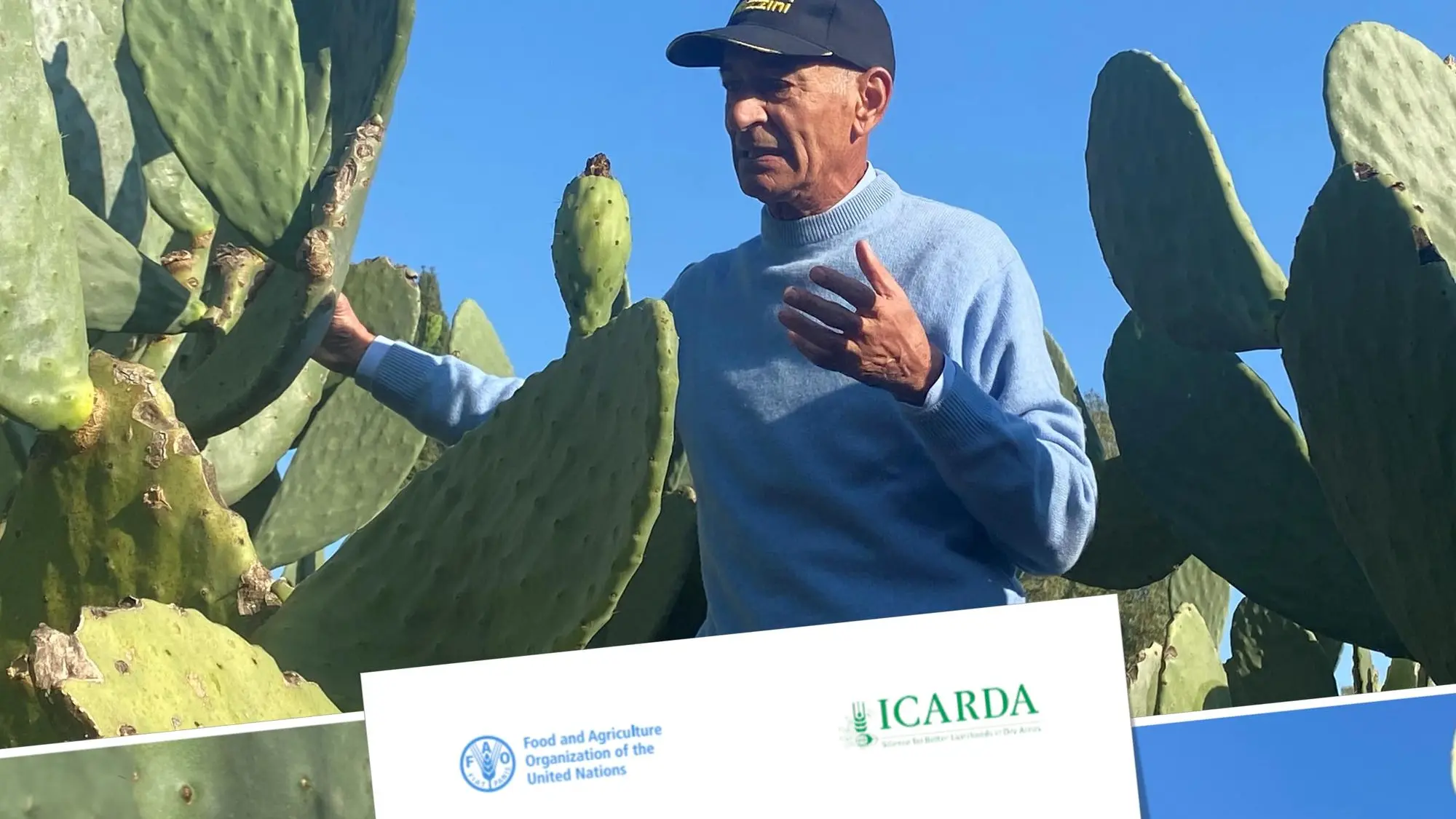
He, Ettore Boi, seventy years old, an effervescent pensioner, with a passion for innovative agriculture, speaks to us with this miraculous fruit. If it weren't science that told the intelligence of plants, one could say that here, in the countryside of Ussana, we reason with the "sacred fruit". After all, it couldn't be otherwise. When the gate of these three hectares of "blades" and "flowers", thorns and fruits, opens wide, you understand that in this strip of perennial green there is something fascinating that is taking place. The daring climbs into the sky of these plants of the future are dotted with imposing fruits, with the most exorbitant colours, a sign of full maturation on the threshold of Christmas. It is whispered to each other throughout the year by Ettore Boi and his 350 plants of local yellow and red cultivars with few thorns. In that dialogue made of harmony and intuition, of agronomic rules and "scozzolatura" techniques, Ussana's primacy is achieved in winter. The fruit par excellence of August in the Campidano hinterland of Cagliari ripens for the second time, in two cycles a year, until December. It's a "face to face" relationship with every single plant. To interpret its potential, ignoring the economic logic completely and immediately. The man who "whispers" to the "prickly pears" has developed a surgical technique, "shovel" by "shovel", flower by flower. Strengthening the projection of the youngest "blades", selecting the most promising shoots for the colder and more advanced season. An "experimental" plantation placed on the "Ussana Formation", a strip of land marked by geological somersaults that have brought out conglomerates, breccias and red-purple clayey sandstones. Not exactly rich soil, except that prickly pears don't need it.