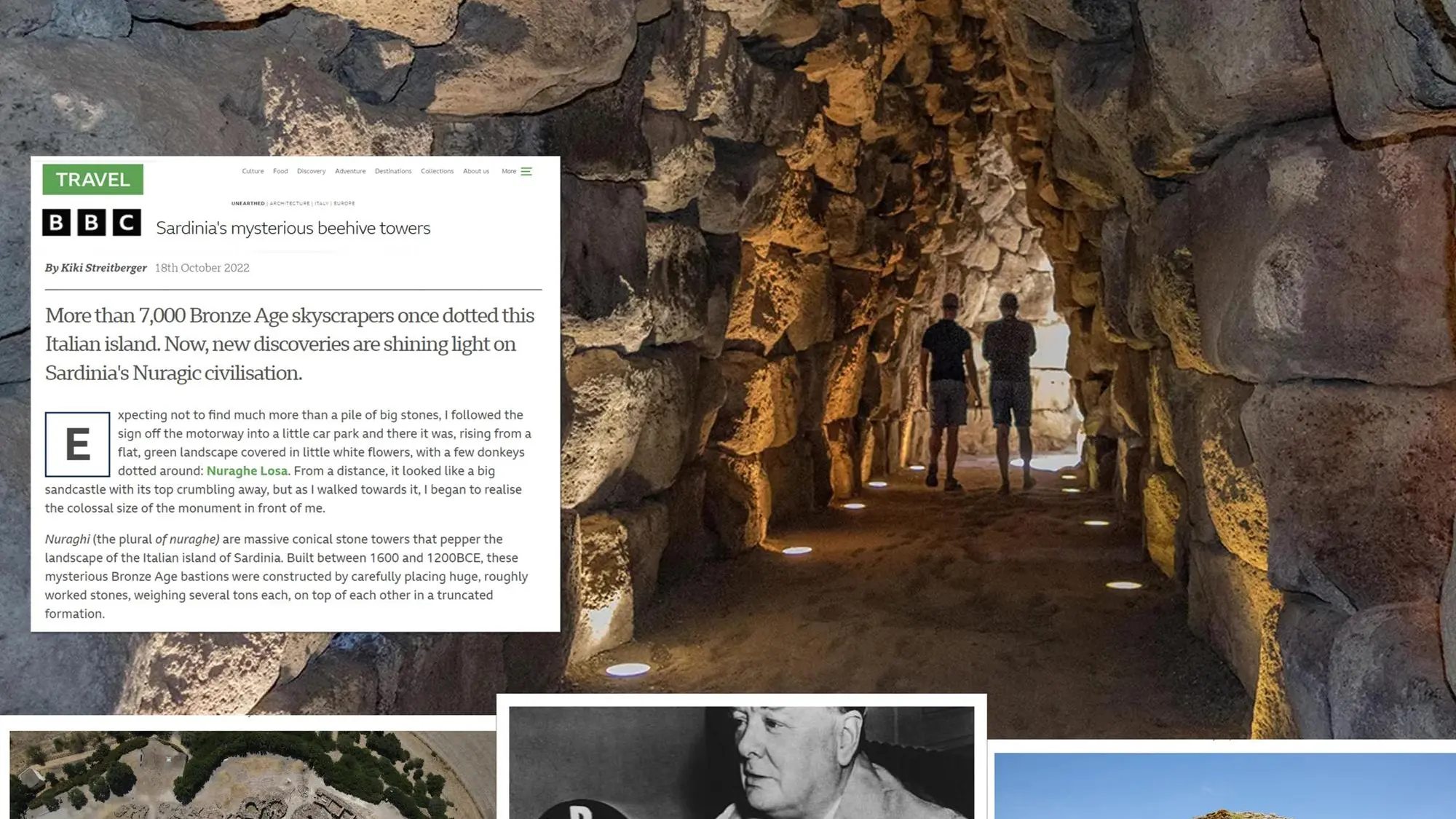


British Broadcasting Corporation, aka BBC. Not a simple television network on the banks of the Thames, but a real world information empire capable of broadcasting in 28 languages, from radio to TV, from digital to social media. From 18 October 1922, the day of the first broadcast, those three letters have always become an indelible mark of authority, truth and freedom of information. Today that media giant is not only the oldest national broadcaster in the world but also the largest in terms of the number of employees, with over 22,000 collaborators.
"Mysterious"
In short, if the BBC deals with the "mysterious" of the Nuraghi Island, it means that the news is there. To launch the special on the "mystery of the Nuraghi" on the world ether, they chose the digital channel, the universal one, capable of letting its "customers" access the "Sardinia Island case" from every corner of the most remote continents. Winston Churchill's speeches about the victory of the Anglo-Saxon colossus no longer make the audience jump, starting from that of May 8, 1945, when through the BBC microphones he communicated the unconditional surrender of the Germans, but a wise as "global ”Management of special news, starting with BBC Travel's new Unearthed series (unearthed in literal translation) created to put the recently discovered archaeological wonders that few people have ever seen in the spotlight of the world.